
Advertisement
Space.Fan — Go Beyond
ApJ · 4 HR AGO
UniverseNEW OBSERVATION

A Dead Galaxy Shows Signs of New Life

By Space.Fan Editorial Desk

Astronomers used a space telescope to spot a galaxy that stopped making stars but suddenly started growing again.
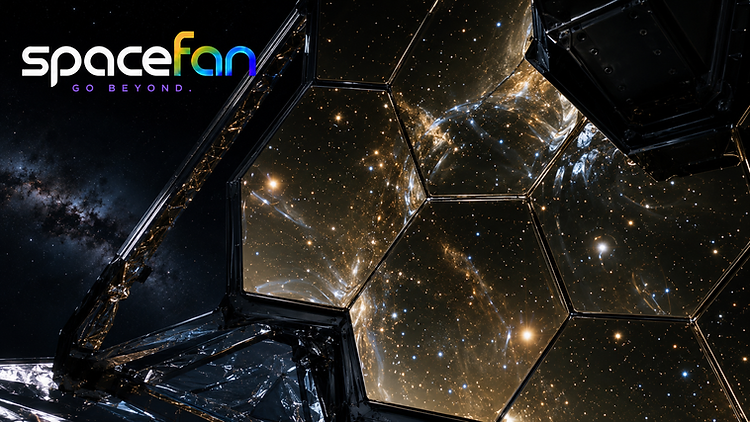
Close-up of the James Webb Space Telescope's gold hexagonal segmented primary mirror in space.
Image · Space.Fan

The Drop

In the deep universe, most massive galaxies are considered 'quiescent,' meaning they are like quiet, retired cities that stopped building new s long ago. However, researchers using the James Webb Space Telescope (JWST) found a galaxy named MRG-M0138 that is behaving unexpectedly. By using a special camera called an integral field unit, they were able to look at the gas and dust inside this distant object. The team noticed that the galaxy was not entirely empty. They found patches of dust and clumps of gas spinning in harmony with the rest of the galaxy. This was a surprise because a quiet galaxy should not have all this moving material. The way the gas is clumped together suggests it did not grow there naturally but was pulled in from somewhere else. By studying the history of the galaxy, the team discovered it had a 'rejuvenation' event about 500 million years ago. This means the galaxy briefly woke up and ted forming new s again after a long period of silence. It appears that the galaxy likely stole gas from smaller neighboring galaxies that were passing by too closely. This discovery is special because the galaxy is very far away, and normally, we cannot see such fine details in distant objects. Because this galaxy is being magnified by gravity from an object in front of it—a phenomenon called gravitational lensing—the telescope was able to see the gas patterns clearly. It gives scientists a rare, zoomed-in look at how galaxies might 'eat' gas to keep themselves active.
Advertisement

Why It Matters

This discovery matters because it helps explain why some massive galaxies look different than others. Previously, scientists thought that once a galaxy became quiet, it stayed that way until it faded out. This evidence shows that galaxies can be messy and gain new fuel through interactions with their neighbors. It also reveals a hidden way that supermassive s at the centers of galaxies stay active. The researchers found a clump of gas very close to the center, which could be the 'food' that keeps the working. This feedback loop is one of the ways galaxies manage their -making activity over billions of years.
Advertisement

The Catch

While the evidence for gas moving around is strong, the researchers still have to rely on models to understand exactly how the gas entered the galaxy. Because this galaxy is being viewed through a gravitational lens, the shape and size of the images can be distorted, which makes it challenging to measure the exact mass and speed of the gas without some room for error.

Put That in Perspective

Scientists plan to use this method to study other distant, quiet galaxies. By comparing this galaxy to others, they hope to learn if these 'rejuvenation' events are common or if MRG-M0138 is a unique case in the history of the universe.

Source September 29, 2026
ApJ

Keep Exploring Space