
Universe
Galaxies, black holes, stars and the shape of everything.
A Strange Star System That Exploded Years Ago Is Still Acting Up
Astronomers have discovered that a star system known for a big explosion in 2009 is showing unusual, repeating brightness changes.
Scientists Get a Clearer View of Our Closest Neighboring Star
Researchers have used high-powered light tools to sharpen our understanding of Proxima Centauri, the star nearest to our own solar system.

Scientists Spot Lopsided Rings Around Rapidly Spinning Stars
New observations reveal that stars surrounded by spinning gas disks have hidden, uneven shapes that ripple over time.
Galaxies Move in Mysterious Ways
Astronomers found that large groups of galaxies are moving a little differently than our best theories predicted.
Why Scientists Are Seeing Double When Looking at the Early Universe
A clever math problem is causing confusion about how the first galaxies grew, but experts think they have finally found the hidden reason why.
Astronomers Reveal False Identities of Space 'Spider' Pulsars
New research shows that some stars thought to be feeding on companions are actually just giant stars masquerading as hungry pulsars.

Scientists Find New Way to See Tiny Hidden Clouds from the Early Universe
A new model shows how we could use radio waves to spot small, ancient gas clumps formed during the cosmic Dark Ages.


Supermassive Black Holes Blow Huge, Hot Bubbles in Space
Scientists found that two powerful black holes are heating up the gas around them much more than expected.


How Tiny Dust Grains Help Build Molecules in Deep Space
Scientists have uncovered how hydrogen molecules form on space dust, revealing the secret energy behind the birth of stars and planets.


Why Some Tiny Galaxies Near the Milky Way Are Stretching Out
Scientists discovered that two neighbor galaxies act differently when they get pulled by the Milky Way's gravity.

Scientists Find a New Way to Spot Hidden Black Holes Near the Milky Way Center
Researchers have discovered a clever trick to detect massive, unseen objects lurking near the giant black hole at the heart of our galaxy.


A Powerful Space Explosion Reveals a Violent Collision
Astronomers witnessed a cosmic smash-up where two high-speed shells of gas collided in deep space.

Cosmic Ray 'Waves' Could Reveal Hidden Space Turbulence
New research shows how tiny ripples in space plasma could help us map the invisible movement of high-energy particles.

Using Galaxy Outskirts to Weigh Hidden Dark Matter
Scientists have found a new way to estimate the mass of invisible dark matter by measuring the faint stars on the edges of large galaxies.

Solving the Mystery of a Strange Pulsar Spinning in Deep Space
Scientists have uncovered why a rare, super-fast star is behaving in such a strange and unexpected way.

A New Explanation for Dark Energy Could Change Our View of Space
Scientists suggest that a property of the smallest particles of matter might be what is pushing our universe to grow faster.
A Star System Acting Like a Fast Magnetic Spinner
Astronomers found a star system that acts like a cosmic magnet, spinning rapidly and shedding material in a unique way after an explosion.
Massive Galaxies Change Their Shape Over Billions of Years
New research reveals that the centers of giant galaxies have slowly thickened over the last 6.5 billion years.
A Dying Star Caught in the Act of Shedding Its Outer Layers
Astronomers used a powerful telescope to watch a star create a beautiful, glowing ring as it nears the end of its life.

Is the Recipe for Building Galaxies the Same Everywhere?
Scientists discovered that the chemical building blocks of stars might follow a universal pattern across the cosmos.
New Computer Models Reveal Secrets of Glowing Galaxy Bars
Scientists have created a better way to map how gas moves inside spiral galaxies like our own Milky Way.
New Tool Helps Astronomers Tell Giant Stars Apart
Researchers found a clever way to classify massive, aging stars by listening to the radio signals they broadcast into space.

A Cosmic Explosion Reveals Two Engines Powering One Giant Blast
Scientists discovered that a massive gamma-ray burst was powered by both a newborn star remnant and a growing black hole.

A New Way Stars Might Explode
Scientists have found that powerful jets inside a dying star could explain why they explode so quickly.


A New Way to Map the Secret Interior of Neutron Stars
Scientists have created a better method to study how matter behaves inside the densest objects in the universe.

Webb Telescope Finds a Tiny Galaxy That Could Rewrite History
Astronomers spotted a tiny, extremely bright galaxy that helps explain how the early universe first filled with light.
Galaxy Jets Are Shaking Up Their Surroundings
Giant jets of energy from black holes act like cosmic battering rams, smashing into the gas inside their home galaxies.
How Giant Bubbles in Space Speed Up Cosmic Particles
Scientists have created a new model showing how bubbles made by star winds push space particles to incredible speeds.
A New AI Tool Speeds Up the Study of Dancing Binary Stars
Scientists have created a new computer brain that can figure out how binary star systems work much faster than ever before.

How Bright Stars Keep Their Dusty Rings Alive
Scientists found out why big, bright stars are surrounded by dust that should have been blown away long ago.
Cosmic Water Beams Reveal Hidden Galaxy Power
Astronomers found a powerful water laser in a distant galaxy, showing how black holes can stir up cosmic gas from thousands of light-years away.

How Magnetic Fields Change as Stars Get Older
Scientists discovered that M dwarf stars lose their magnetic intensity like a fading battery as they grow older.

Solving the Mystery of Missing Space Sulfur
Scientists discovered that icy hydrogen sulfide hides in space clouds, potentially solving a long-standing chemistry puzzle.
Can Tiny Black Holes Destroy Stars From Within?
Scientists have found that small, ancient black holes might hide inside stars and occasionally tear them apart from the inside out.
Space Telescopes Watch Distant Objects Flicker in X-Ray Light
Scientists spent five years tracking X-ray light from deep space to see how distant objects change over time.
Solving the Mystery of Blue Straggler Stars in Star Cluster Collinder 261
Scientists have found that 'blue straggler' stars in a distant cluster likely get their youthful glow from feeding on their nearby partners.

Scientists Catch a Rare Look at a High-Energy Space Explosion
Researchers have studied a powerful Gamma-ray burst to reveal the secrets of how these massive explosions create intense magnetic fields.
Fresh Gas Inflows Help Galaxies Grow From the Inside Out
Astronomers have finally spotted how fresh gas flows into a galaxy to spark new star formation in its outer edges.
When Stars Get Too Close to Black Holes, They May Have Two Fates
New simulations show that stars caught near a black hole either get torn apart in a flash or enter a long, stable dance of losing matter.
How Neutron Stars Keep Their Shape After Cooling Down
Scientists have calculated how intense magnetic fields help neutron stars hold onto their lopsided shapes as they harden from hot, swirling gas.
Updating How We Measure Cosmic Distances Using Exploding Stars
Researchers improved how they measure distances in the universe by correcting errors in how we track the galaxies where stars explode.
New Map of Hot Gas Clouds Reveals How Galaxies Stay Warm
Scientists have tracked the hidden hot gas surrounding millions of galaxies to learn how they grow and change over time.

Are Early Galaxies Hiding Black Holes or Just Misunderstood?
New models suggest that young galaxies from the dawn of time might not need giant black holes to explain their bright, glowing light.
Scientists Find Clues to a Hidden Source of Gold in Space
A new study suggests that heavy metals like gold are being made by unknown cosmic events, not just colliding neutron stars.


Supercomputer Simulations Reveal Secret Life of Exploding Stars
New high-tech models show how magnetic fields shape the violent death of massive stars.
Astronomers Find Thousands of Galaxies That Change Their Looks
A new catalog reveals thousands of active galaxies that brighten or fade over just a few months or years.
Why Galaxy Clusters Are Missing Their Gamma-Ray Glow
Scientists used supercomputers to figure out why some areas of space don't produce the high-energy light we expected to see.
Listening for Wobbly Black Holes in Deep Space
Scientists are using gravitational wave detectors to spot black holes that don't spin in perfect circles before they crash.
Are These Mysterious Space Signals Coming From White Dwarf Stars?
Scientists are investigating if strange, long-lasting signals from deep space are actually coming from magnetic white dwarf stars.
A New Model Explains How Black Holes Create Clouds of Energy
Researchers have created a new computer model to explain the mysterious, glowing clouds of particles that surround black holes.
A Strange Dancing Star System Found in the M81 Galaxy
Astronomers found a unique star system that shoots out regular, bright flashes of X-ray energy like a cosmic bonfire.
Astronomers Map Powerful Galactic Winds Blowing from a Neighboring Galaxy
New research reveals how giant stars push gas out of the Large Magellanic Cloud, helping us understand how galaxies grow and change.
Updating How We See the Life of Massive Stars
New computer models reveal that binary star systems play a much bigger role in the light of distant galaxies than we once thought.
Magnetic Secrets of the Serpens Star Factory
Scientists used a specialized telescope to map how magnetic fields and space dust interact inside a giant nursery where new stars are born.
Black Hole Disks Form Thin Filaments When Cooling Down
New computer models reveal how black holes change their shape by cooling down the gas spiraling into them.
New Clues About Strange Radio Bursts in Old Galaxies
Scientists discovered that mysterious, repeating radio signals can come from very old, quiet galaxies, not just young, active ones.


A New Way to See the Most Powerful Explosions in the Universe
Scientists found that cosmic explosions called Gamma-Ray Bursts look different when we account for their incredible speed.

Spotting the First Light of a Dying Star's Explosion
Scientists have created new computer models to help us see the brilliant flash of a star's final moments.
Tracing the Milky Way Back to its Very First Stars
A new computer model explains how the first stars in the universe helped build the Milky Way galaxy we see today.
The Milky Way Was Built in Bursts of Star Formation
New research shows our galaxy grew its early disk through rapid growth spurts instead of a slow and steady process.
How Galaxy Crashes Change the Birth of New Stars
When two galaxies collide, they trigger a chaotic dance that reshapes how stars form and how gas behaves.

How Galaxy Crashes Change the Way Stars Are Born
Scientists found that when galaxies smash into each other, they force gas into their centers to create new stars in a specific, lopsided pattern.
Solving the Mystery of How Heavy Elements Are Made in Space
Scientists have created a new computer tool to figure out exactly how the universe creates heavy ingredients like silver and gold.
Black Holes Might Have Sudden Bursts of Light After Eating Stars
Scientists have found that black holes could produce unexpected flashes of light long after they finish tearing apart a star.
How Supermassive Black Holes Got Their Start in the Early Universe
New simulations show that medium-sized black hole seeds need a specific boost to grow into the giants we see today.
How Galaxy Crashes Fuel Star Birth
When galaxies collide, they create a cosmic stir that helps feed gas into new stars.
Early Galaxies Grew in Bursts of Star Formation
New research shows that galaxies in the early universe grew through quick, powerful bursts of star creation rather than smooth, steady growth.
How Black Holes Dance in the Centers of Galaxies
Scientists discovered that black holes can get stuck in rhythmic orbits inside the swirling disks of giant galaxies.
Hidden Neighbors Found Dancing Around Stars in Deep Space
Scientists used data from a space telescope to find hundreds of mysterious, heavy objects hidden in orbit around distant stars.
No Quick Black Hole Growth Found in Early Universe Star Cities
Scientists looked for signs of fast-growing black holes in an ancient, crowded space neighborhood but found none.
Listening to the Universe: Clearer Signals from a Rare Double Pulsar
Scientists used a powerful radio telescope array to get a better look at one of space's most famous rotating star pairs.
Webb Telescope Refines How We Measure Distances in Deep Space
Scientists used the Webb telescope to get a better look at special blinking stars in a tiny galaxy to improve our cosmic measuring tape.
A New Way to Measure the Weight of Giant Black Holes
Scientists found that the angle we view a black hole from changes how we calculate its massive size.
Solving the Mystery of Gas Clouds Hiding Radio Bursts
Scientists have found a new way to see through space interference to study mysterious radio signals coming from far away.
A New Way to Map the Whirlpool of Gas Around Giant Black Holes
Scientists have developed a better method to study the mysterious, fast-moving rings of gas surrounding supermassive black holes.
Solving the Mystery of Nuclear Pasta Inside Neutron Stars
Scientists have created new computer models to uncover how strange, noodle-like shapes form deep inside the densest stars in the universe.


Hunting for Dark Matter Using Ancient Heat Echoes
Scientists are using the glowing history of our early universe to finally solve the mystery of what dark matter is actually made of.
New AI Tool Sharpens Our View of Hidden Space Lenses
Scientists have created a powerful new computer model to see how giant galaxies bend light from the distant universe.
A New Map Reveals the Secret History of Omega Centauri
Scientists used a smart computer model to analyze thousands of stars in a massive cluster, uncovering clues about how it formed.
Solving the Mystery of Cosmic Candle Explosions
New simulations show how stars become bright cosmic landmarks, helping astronomers map the universe more accurately than ever before.
Mapping the Ghostly Shells of a Distant Galaxy
Scientists have mapped the movement of stars in a nearby galaxy to uncover secrets from its violent past.
Black Hole Views Depend on Which Way They Tilt
Scientists discovered that the angle of a black hole's feeding disk changes how we see its energy light up in space.
A Monster Black Hole Stirs Up Hot Gas in a Distant Galaxy
New space observations show how powerful jets from a giant black hole push around the hot gas in its galaxy.
A New Way to Find Ghostly Black Holes Hiding in Our Galaxy
Scientists are preparing to use a powerful new space telescope to hunt for invisible black holes drifting through the Milky Way.
AI Helps Scientists Map Millions of Invisible Galaxies
Researchers are using artificial intelligence to build massive, detailed maps of the universe without needing giant supercomputers for every step.
Tuning In: LISA Could Hear 'Hidden' Stellar Pairs Across Our Galaxy
A future space observatory might detect the hum of cataclysmic stars that were once invisible to our traditional telescopes.
Predicting How Massive Black Holes Collide
New simulations suggest black holes merge faster than we thought, giving us a better map for the upcoming LISA space mission.
Scientists Use Existing Space Data to Map Distant Galaxy Gas
Researchers have found a new way to measure carbon gas in far-off galaxies using maps made for studying the early universe.

New Data Challenges Idea of a Giant Black Hole in an Early Galaxy
Scientists took a closer look at a distant galaxy called UHZ1 and found that its famous supermassive black hole might not exist after all.
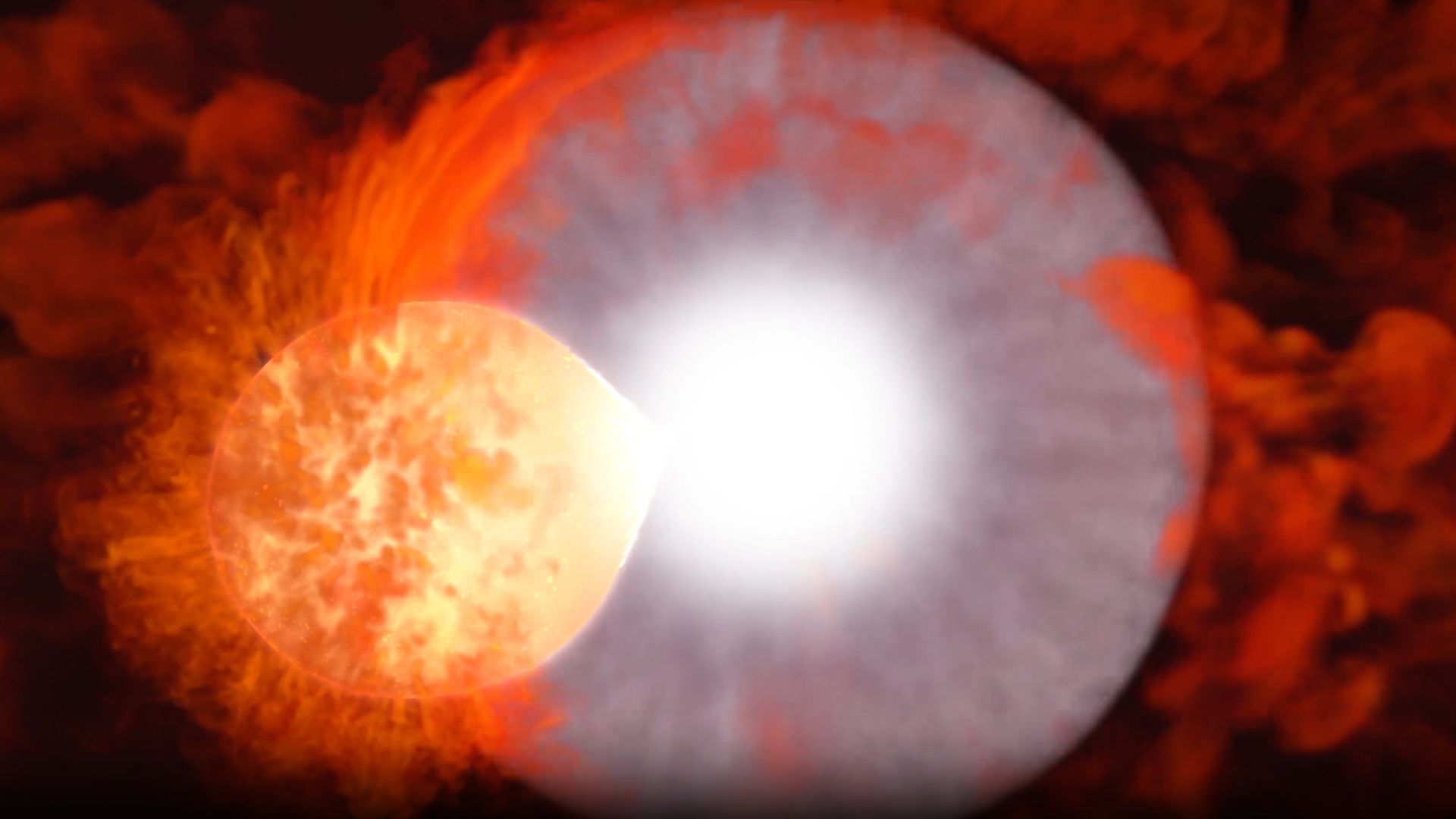
Why We Are Still Waiting for the Blaze Star to Erupt
Astronomers know a cosmic explosion is coming, but the star is taking its time.
Supercomputer Models Reveal How Massive Stars Die in Violent Explosions
Scientists created a new library of digital stars to help us understand how some of the most powerful explosions in the universe occur.

Mapping the Invisible 'MeV Gap' of High-Energy Space
Scientists have unveiled a massive new map of space light, helping us see hidden energy signals that were previously almost impossible to detect.
Future Space Detectors Might Catch Ghostly Repeating Gravity Waves
Scientists have built a model to predict how space-based telescopes could spot gravity waves bent by the massive gravity of distant galaxies.
Solving the Mystery of Cosmic Dust in Star-Forming Clouds
New research reveals that dust grains in space grow and change in unexpected ways depending on their local environment.
Why Some Star Clusters Look Like They Are Falling Apart
New research reveals that missing low-mass stars are making some star groups seem unstable when they are actually perfectly fine.
Astronomers Study Stars That Feed Off Each Other
Scientists have taken a closer look at rare binary star systems that swap mass and hide their secrets behind shells of dust.
Milky Way Stars Tilted to Match Our Galaxy's Shape
New research shows that stars in our galaxy move in a tilted pattern that reveals the hidden strength of the Milky Way's gravity.
Why Neutron Stars Wobble Like Spinning Tops
Scientists have uncovered why some dead stars spin unevenly, helping us hunt for invisible ripples in space called gravitational waves.
Cooling Down: New Models Show How Neutron Stars Lose Energy
Scientists have updated their math to better understand how dense, collapsed stars cool down by releasing ghost-like particles called neutrinos.
A New Way to Tune Into Pulsar Signals
Scientists have found a better way to clean up static interference from spinning neutron stars, helping us hunt for ripples in space.
How Galaxies Clear a Path for Starlight
New research shows how powerful winds from young, crowded galaxies help light travel through space.
Solving the Mystery of Bending Light in Space
Scientists found a better way to explain why distant light looks 'wrong' when warped by galaxies.