Advertisement
Space.Fan — Go Beyond
NASA · 1 DAY AGO
ImagesNEW OBSERVATION

A Glowing Glow in the Night Sky

By Space.Fan Editorial Desk

Astronomers have captured a stunning view of a faint, ghostly light that stretches across our night sky called zodiacal light.
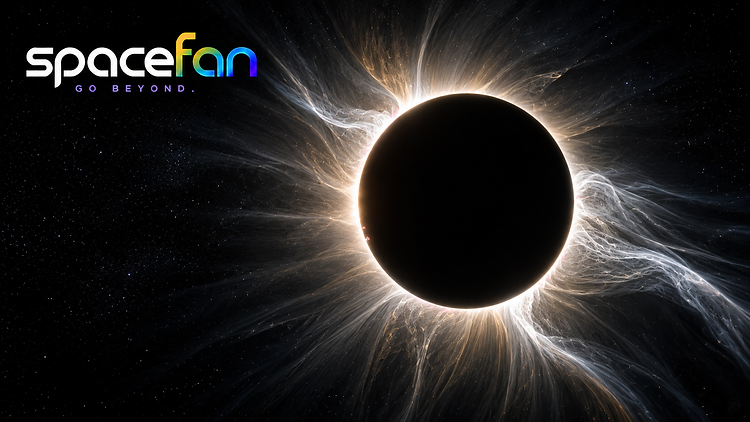
Total solar eclipse showing a dark central disk surrounded by the bright flowing corona of the Sun.
Image · Space.Fan

The Drop

Have you ever looked at the night sky and noticed a faint, triangular glow rising from the horizon? This is called zodiacal light. It is not an atmospheric effect, but rather a reflection of sunlight off a vast cloud of tiny dust particles in our solar system. These dust grains are remnants left over from the formation of our s billions of years ago. As they drift in space near the plane of the s, they scatter the Sun's light, creating a ghostly, pyramid-shaped beam that is most visible just after sunset or before sunrise. Capturing this light is tricky because it is very faint. Professional astronomers use long-exposure photography to see it clearly, as it is often drowned out by light pollution or the brightness of the . By tracking this glow, scientists can better understand how much dust is still floating in the space between our s. This dust acts like a cosmic record, showing us the debris left behind as the solar system matured. Seeing it requires a very dark sky far away from city lights, making it a rare and beautiful treat for gazers.
Advertisement

Why It Matters

Studying zodiacal light helps researchers map out the leftover material in our solar system. By tracking how sunlight bounces off these tiny specks, scientists can estimate how much dust is present and where it is moving. This is important for space missions, as dust can potentially damage spacecraft traveling through the solar system.
Advertisement

The Catch

Zodiacal light is extremely faint and can easily be confused with other phenomena like airglow or light pollution. Because it relies on precise lighting conditions, it is only visible from very specific locations on Earth during certain times of the year, limiting how often it can be studied.

Put That in Perspective

Ancient observers often wondered about this mysterious band of light long before modern telescopes existed. Today, it remains a favorite subject for space photographers who use advanced cameras to reveal the vast, hidden structure of dust that surrounds our home planet.

Source September 19, 2026
NASA

Keep Exploring Space