Advertisement
Space.Fan — Go Beyond
ApJS · 3 HR AGO
UniversePEER REVIEWED

A New Look at Giant, Metal-Poor Stars

By Space.Fan Editorial Desk

Astronomers used the Hubble Space Telescope to create a library of hot, massive stars in galaxies that lack heavy elements.
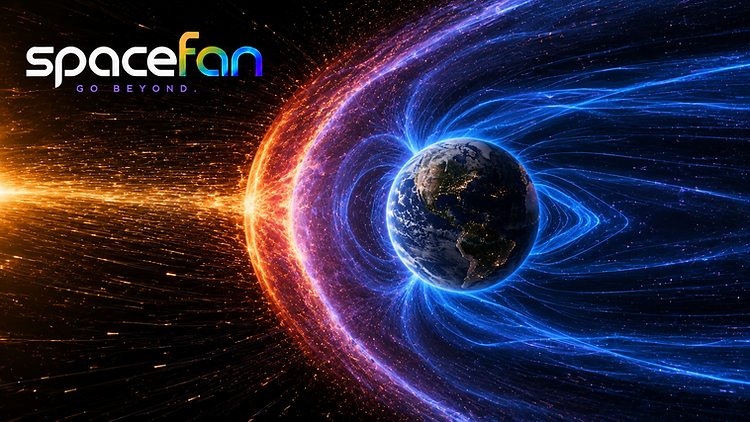
Earth surrounded by glowing magnetic field lines as solar particles strike the magnetosphere.
Image · Space.Fan

The Drop

Astronomers have created a new library of information about a special group of s called O-type s. These s are very hot and massive, and they live in nearby galaxies that have very few heavy elements like iron or oxygen. Scientists call these places metal-poor environments. These types of galaxies help us learn about what the universe was like long ago when it was just beginning. By studying these s, we can better understand how s form and behave in different parts of space. To get this data, the team used the Hubble Space Telescope and its special Cosmic Origins Spectrograph. This instrument acts like a prism, breaking down light from the s into a rainbow-like spectrum. By looking at these colors, scientists can measure how hot the s are and how fast their powerful outer winds move. They looked at 12 new s and added them to an existing collection of 17 others. This group of 29 s makes up a new collection called TEMPOS, or the Treasury of Extremely Metal-poor O s. This collection is important because before now, there were very few high-quality pictures and measurements of these types of s. By having a large group of s observed in the same way, scientists can finally compare them to one another fairly. One big discovery from this work is that the wind speed of these s seems to be connected to how much metal is in their home galaxy. The researchers found that as galaxies have fewer heavy elements, the winds blowing off these massive s change. They noticed a possible trend where these winds get much weaker once the metal levels in a galaxy drop below a certain point.
Advertisement

Why It Matters

Understanding how massive s behave is important because they act like big engines in galaxies. Their powerful winds blow gas and dust around, which changes how new s and s are made. By studying these s in metal-poor galaxies, scientists can learn more about how the early universe worked billions of years ago. This data also helps researchers interpret observations from other powerful tools. Since the early universe was mostly made of light elements, knowing how s acted then helps us understand the light we see from the very distant, ancient galaxies captured by space telescopes.
Advertisement

The Catch

While this study is a great t, there are still some unknowns. The researchers observed a small group of s, which makes it hard to be sure if these findings apply to all s of this type everywhere. Because these s are very far away, the data is very difficult to collect and can be affected by noise in the equipment. Further study is needed to confirm if the wind strength drops as sharply as the current data suggests.

Put That in Perspective

Scientists have studied stars for a long time, but they have mostly focused on stars that are like our Sun or exist in galaxies filled with heavy elements. This new library is special because it gives astronomers a better way to look at the 'metal-poor' stars that represent how the universe behaved in its youth. Future work will include adding more light data and optical telescope measurements to the collection.

Source September 27, 2026
ApJS

Keep Exploring Space