Advertisement
Space.Fan — Go Beyond
ApJ · 5 DAYS AGO
UniversePEER REVIEWED

A New Map Reveals the Secret History of Omega Centauri

By Space.Fan Editorial Desk

Scientists used a smart computer model to analyze thousands of stars in a massive cluster, uncovering clues about how it formed.
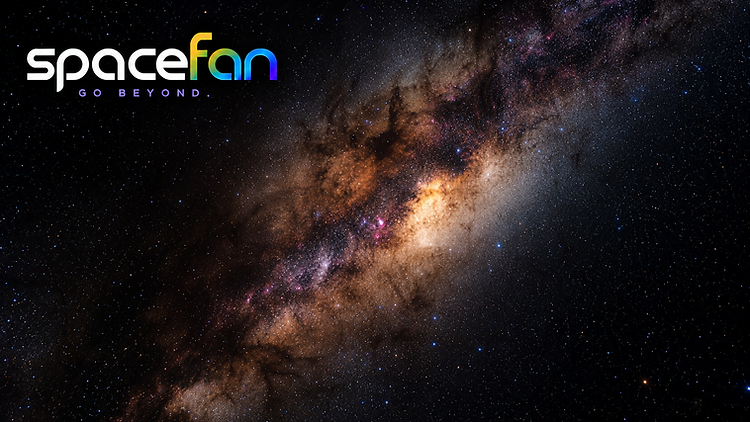
Dense star fields and glowing dust clouds across the center of the Milky Way galaxy.

The Drop

Omega Centauri is a massive, crowded ball of s that has long puzzled astronomers. It is so packed with s that it is hard to tell them apart, making it difficult to study their individual chemical ingredients. To solve this, a team of researchers looked at over 7,000 red giant s inside the cluster. They used a powerful instrument called the MUSE spectrograph, which acts like a prism to split light into a rainbow, revealing the chemical fingerprints hidden inside. To process this mountain of data, the scientists used a machine learning tool that acts like an expert digital detective. By teaching a computer to recognize specific patterns in the light, they were able to quickly and accurately measure chemical elements like carbon, nitrogen, and oxygen for thousands of s at once. This allowed them to create the most detailed chemical map of the cluster ever made.
Advertisement

Why It Matters

Understanding the chemical makeup of these s acts like a time machine. It tells us how different generations of s formed and changed over time. By mapping these elements, researchers can see how the cluster built itself up. This study is important because it tests our theories about where Omega Centauri came from—some think it might be the leftover core of a small galaxy that was swallowed by our own Milky Way long ago.
Advertisement

The Catch

While the new computer method is very powerful, it does not solve every mystery. Even with this giant data set, the researchers found that current theories about how the cluster formed still do not perfectly explain everything they observed. There is no single story that accounts for every chemical pattern found in the s, meaning scientists still have more work to do to fill in the missing pieces of the puzzle.

Put That in Perspective

This study is a massive step forward from older methods that could only look at a few stars at a time using fiber optic cables. By using machine learning, scientists have moved from studying tiny snapshots to seeing the 'big picture' of the entire cluster. Future research will likely focus on using these new techniques to map other mysterious objects across our galaxy.

Source November 16, 2026
Z. Wang, A. C. Seth, C. Clontz, N. Neumayer, M. Häberle, S. Kamann, M. Latour, M. S. Nitschai, P. J. Smith, S. O. Souza
University of Utah, Max Planck Institute for Astronomy, European Southern Observatory, Liverpool John Moores University, Georg-August-Universität Göttingen, Universität Heidelberg, University of Vienna, Universidad Central de Chile, Space Telescope Science Institute·The Astrophysical Journal·10.3847/1538-4357/aeb6ea

Keep Exploring Space