Advertisement
Space.Fan — Go Beyond
Nature Astronomy · 4 DAYS AGO
Life?PEER REVIEWED

A New Scientific Field Aims to Connect Solar Activity and Alien Life

By Space.Fan Editorial Desk

Scientists have officially introduced 'Heliobiology' to study how a star's behavior shapes the environment for life on its planets.
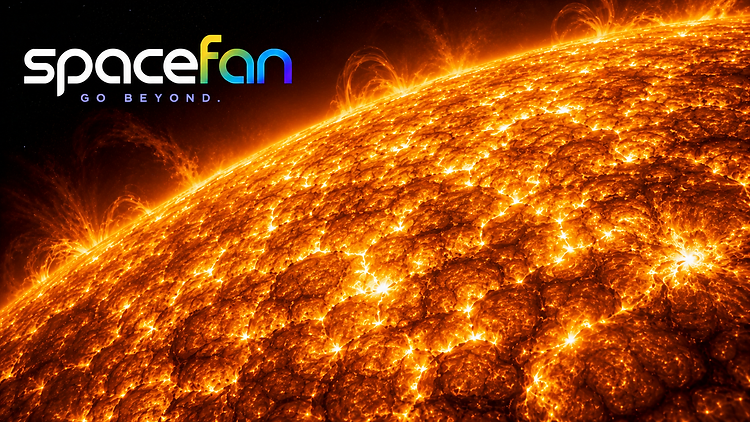
Close-up of the fiery Sun showing bright active regions and looping plasma above its surface.
Image · Space.Fan

The Drop

For a long time, experts studying s and experts looking for life on other worlds worked in separate bubbles. Now, researchers are breaking those walls down with a new field called heliobiology. This area of science focuses on how a , like our own Sun, affects the chemistry and atmosphere of the s orbiting it. By understanding these interactions, scientists hope to learn more about how life gets its t. This new approach combines what we know about space weather, chemistry, and science into one clear plan. It provides a formal way for researchers to talk about how a 's energy can either help or hurt the conditions needed for life. The team explains that because a is the main energy source for its s, you cannot study potential habitats without also studying the that lights them up. By using existing data from missions and solar physics, they have created a guide for how to connect these different fields. This helps scientists look at distant s in a more organized way.
Advertisement

Why It Matters

This is important because it changes how we hunt for life in the galaxy. Instead of looking only at the itself, scientists will now prioritize the 'space weather' and radiation coming from the host . This helps rule out s that might be too blasted by harsh solar energy to support life, focusing our limited telescope time on worlds that are actually likely to be cozy enough for living things.
Advertisement

The Catch

While this framework is a great step for organizing research, it is currently a set of ideas and rules for how to work together. It does not yet identify a specific that definitely hosts life. The success of this approach depends on how well scientists from different fields can coordinate and share their data in the future.

Put That in Perspective

In the past, solar physics and the search for life were seen as different tasks. This new proposal builds on years of individual studies regarding star behavior and planet atmospheres. Researchers will likely use this framework to refine how they use big telescopes to scan the atmospheres of exoplanets for signs of biological activity.

Source September 9, 2026
Vladimir S. Airapetian, James L. Green
NASA Goddard Space Flight Center, Integrated Space Science and Technology Institute, Space Science Endeavors·Nature Astronomy·10.1038/s41550-026-02970-y

Keep Exploring Space