
Hera Probe Captures First Close-Up Look at Asteroid Dimorphos
The European Space Agency's Hera mission has finally arrived at the asteroid site where NASA previously crashed a spacecraft.
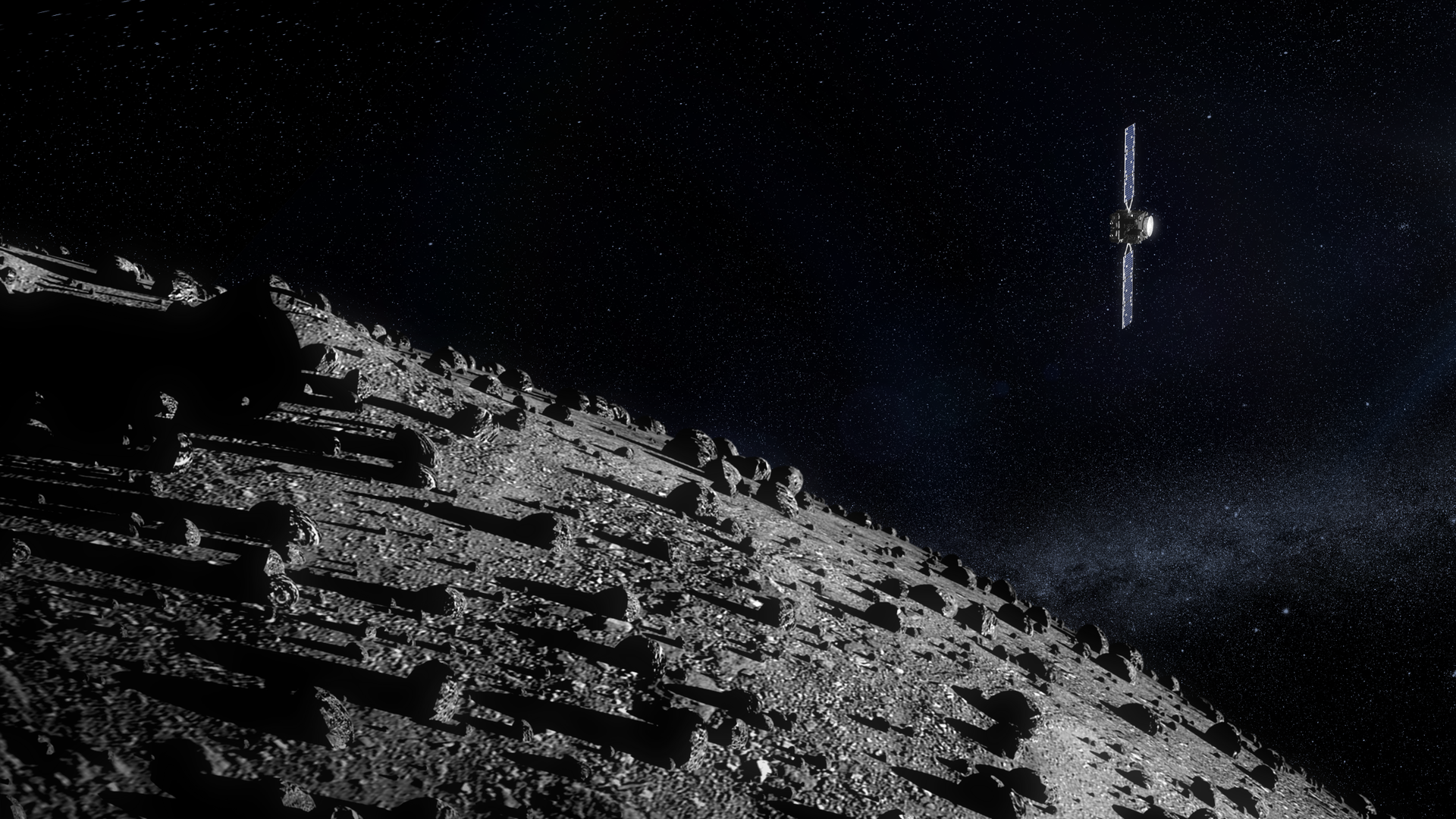
The Drop
Why It Matters
The Catch
Put That in Perspective
This follows the original 2024 DART mission, which was the first time humanity intentionally moved a celestial body. Hera serves as the follow-up inspection to confirm the long-term results of that experiment.
Keep Exploring Space


Asteroid Bennu Holds Key Nitrogen Building Blocks
Scientists have confirmed that samples from asteroid Bennu contain nitrogen-rich materials that could help explain how life began on Earth.


Asteroid Impacts Could Cause Dangerous Flooding Even Days Later
Scientists are using computer models to learn how a space rock hitting Earth might lead to hidden dangers like extreme floods.

Scientists Create the Most Detailed Map of Matter in the Universe
Using ancient light, researchers have mapped the invisible mass of the universe with record-breaking clarity.


How Supermassive Black Holes 'Eat' Their Galactic Meals
Scientists have found that giant black holes feed on 'rain' rather than just pulling in nearby gas in a simple, smooth way.