Advertisement
Space.Fan — Go Beyond
ApJ · 7 DAYS AGO
DiscoveriesSIMULATION

How Dust Clumps Together to Build New Planets

By Space.Fan Editorial Desk

Scientists have found a new way that tiny grains of space dust gather together to help grow planets.

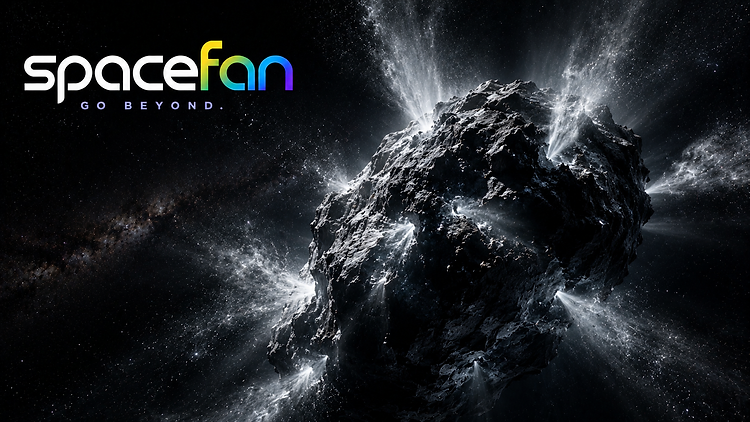
Dark comet nucleus releasing bright jets of gas and dust into surrounding space.
Image · Space.Fan

The Drop

When a new star is born, it is surrounded by a flat, spinning disk made of gas and tiny bits of dust. Scientists have long wondered how this fine dust turns into larger rocks and eventually planets. The process is difficult because the dust usually spreads out instead of sticking together in the swirling gas. New computer simulations show that small-scale turbulence plays a huge role in this process. Even when the disk seems calm, the gas moves in complex, swirling patterns. These movements create tiny pockets or traps where dust grains are pushed together. This process is called turbulent concentration. Researchers studied how these dust grains behave in these swirling gas pockets. They found that the dust forms thin, dense lines that match the shapes of the gas movements. These clumps grow thicker and more solid, which is a vital step in helping small dust grains become large enough to eventually become planets. This discovery challenges some older ideas about how dust collects. Previously, many experts thought a specific process called streaming instability was the only way for dust to clump up. This new study suggests that turbulent concentration happens even in environments where that earlier process is too slow to work, providing a more complete picture of how planets start.
Advertisement

Why It Matters

Understanding this process helps scientists solve the mystery of how planets grow from almost invisible dust. If the dust cannot clump together, planets would never form at all. By identifying turbulent concentration as a key driver, researchers now have a better explanation for how planets can begin their growth in the calmest parts of a star's disk.
Advertisement

The Catch

This study is based on computer simulations rather than direct observations of a distant solar system. While these models are designed to be as realistic as possible, they rely on assumptions about how gas and dust behave in space. Future observations with powerful telescopes will be needed to see if these patterns actually exist in real planet-forming disks.

Put That in Perspective

Scientists plan to use these findings to improve future computer models of planetary birth. By comparing these simulated dust patterns with images of real disks captured by telescopes, they hope to confirm that these tiny clumping patterns are common throughout the universe.

Source September 4, 2026
ApJ

Keep Exploring Space