Advertisement
Space.Fan — Go Beyond
ApJ · 6 DAYS AGO
UniverseSIMULATION

How Giant Stars Become Massive Black Holes in Busy Space Clusters

By Space.Fan Editorial Desk

New computer simulations show how huge stars can crash into each other to form some of the biggest black holes we have ever seen.
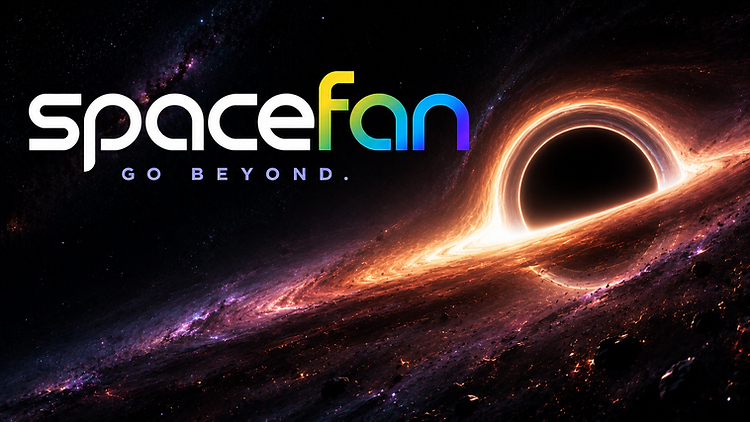
A black hole with a glowing accretion disk in deep space.

The Drop

In the deepest parts of space, some clusters are packed very tightly with s. Scientists have long wondered how these clusters create such huge s. By using computer simulations that track how s move and bump into each other, researchers discovered that s in these crowded areas can collide and merge. This process helps them grow into 'very massive s' that are much larger than the ones we see in our own neighborhood. These s are not just big; they also spin extremely fast. As they grow through collisions, they pull in more material, which makes them expand in size. This unique stage helps them reach extreme masses before they eventually run out of fuel. Once these giants finish their lives, they do not just fade away. Instead, they collapse inward to become heavy s. Because they were spinning so quickly, they end up surrounded by a huge, flat ring of dust and gas known as an . This system is so powerful that it can send ripples through space called gravitational waves.
Advertisement

Why It Matters

This research is important because it gives us a better idea of how the universe creates giant s. We have already detected gravitational waves from massive collisions in space, but it was hard to explain how those s got so heavy. By showing that these 'very massive s' can form in dense clusters, scientists now have a solid path to explain the origins of these mysterious, heavy objects.
Advertisement

The Catch

These findings are based on computer simulations, which are models of how we think the universe works. Because we cannot watch s grow over millions of years in real time, these results depend on specific assumptions about how fast s pull in matter and how they behave during collisions. Future observations with space telescopes are needed to see if these giant s actually exist in the way these computer models predict.

Put That in Perspective

Scientists are looking at events like GW190521, which produced a very heavy black hole. This new study suggests that such events might be the result of these massive, spinning stars from crowded clusters. Researchers hope to use this data to identify similar events in the future.

Source September 10, 2026
ApJ

Keep Exploring Space