Advertisement
Space.Fan — Go Beyond
ApJ · 3 HR AGO
UniversePEER REVIEWED

Hunting for Flickering Explosions in Deep Space

By Space.Fan Editorial Desk

Scientists used space telescopes to search for weird, blinking light shows from rare, massive space explosions called LFBOTs.
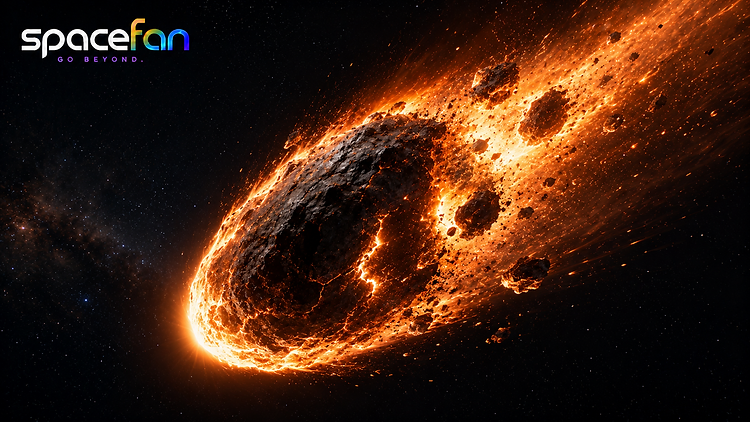
Large fractured asteroid engulfed in flames and glowing debris as it travels through space.
Image · Space.Fan

The Drop

Some of the brightest and fastest explosions in the universe are known as LFBOTs. These events usually shine brightly for a short time and then fade away. Recently, scientists noticed that one specific explosion, called AT2022tsd, ted to blink or flare up again for several days after its initial blast. This led experts to think a central engine, like a or a spinning called a , might be hiding inside the debris and creating these pulses of light. To see if this happened elsewhere, a research team looked at data from the TESS and ZTF telescopes to check 12 other LFBOTs. They scanned the locations of these explosions for months and even years after they first appeared. They wanted to know if these events were common or if they were a special trait of just one explosion. After searching through the data, the team found a few flickering signals. However, they believe these signals were actually caused by small objects in our own solar system, like s, passing by the telescope lens. This means they did not find clear proof of these mysterious late-time flares in the other explosions they checked.
Advertisement

Why It Matters

This study is important because it helps us understand the power source behind these giant cosmic bursts. By not finding more flickering, the team learned that the engine behind an LFBOT might turn off or run out of energy quite quickly. Knowing this helps scientists narrow down what these objects are, as it suggests the extreme behavior seen in the first discovery is rare or lasts only for a short window of time.
Advertisement

The Catch

The biggest challenge is that telescopes like TESS are designed to look at s, but they can be tricked by objects moving much closer to Earth. The team found seven signals that looked like flares, but they concluded these were likely just moving space rocks in our solar system blocking the view. This makes it hard to be certain if any true deep-space flaring occurred in the sample studied.

Put That in Perspective

Scientists are now looking forward to using newer, faster-scanning telescopes that can snap pictures of the sky more often. These future tools will help them catch these quick, flickering events more easily and tell the difference between a distant, exploding engine and a local asteroid moving across the sky.

Source September 26, 2026
ApJ

Keep Exploring Space