
Mapping Hidden Magnetic Fields in Space Clouds
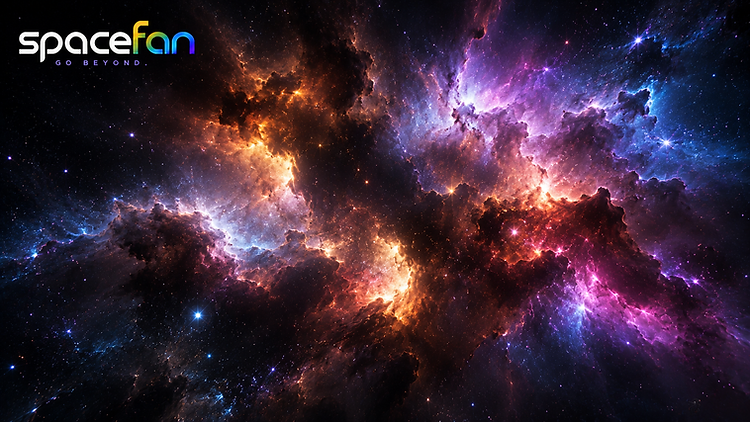
Scientists have mapped the invisible magnetic fields inside three giant dust clouds to see how they shape the birth of stars.
The Drop
Why It Matters
The Catch
Put That in Perspective
Scientists have long wondered exactly how magnetic fields interact with the tiny dust particles that make up space clouds. This study builds on years of work using the Davis-Chandrasekhar-Fermi method, a classic tool used by astronomers to weigh the strength of magnetic fields. Future research will likely focus on peering deeper into the dense hearts of these clouds to see if the magnetic fields behave the same way they do on the outskirts.
Keep Exploring Space

Updating the Recipe for Kilonovae Explosions
Scientists have improved the atomic data models used to study the bright, metallic light shows caused by colliding neutron stars.


A New Supercomputer Tool Speeds Up Space Simulations
Scientists have created a faster way for computers to model complex events in space like exploding stars.

A Lava Planet Keeps a Surprising Reflective Shield
Astronomers found that a scorched rocky world is wrapped in a glowing, reflective atmosphere that shouldn't be there.

New AI Tool Speeds Up the Hunt for Dying Stars
Scientists are using artificial intelligence to scan thousands of deep space images for rare planetary nebulae.