
Advertisement
Space.Fan — Go Beyond
ApJ · 1 DAY AGO
UniversePEER REVIEWED

Massive Galaxies Have Slowed Their Spin Over Billions of Years

By Space.Fan Editorial Desk

Scientists discovered that big, ancient galaxies were once spinning faster than the ones we see around us today.
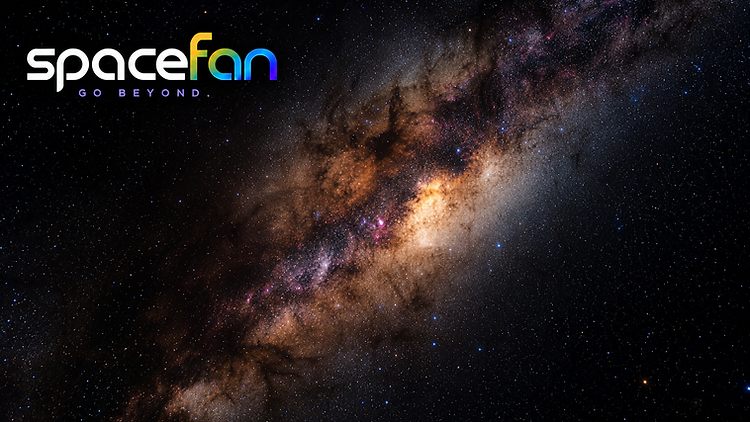
Dense star fields and glowing dust clouds across the center of the Milky Way galaxy.
Image · Space.Fan

The Drop

Galaxies are large groups of s held together by gravity. For a long time, astronomers have wondered how these massive structures change as they age. By looking at light from 212 distant galaxies, researchers were able to see what these space islands looked like about seven billion years ago. They used a special instrument called a spectrograph to measure how fast the s inside these galaxies are moving. By studying the light, the team could tell if the s were moving in an organized, spinning circle or if they were moving in a random, messy way. The study found that these older, distant galaxies were spinning much more consistently than galaxies of the same size that are closer to us today. This means that as time goes on, these giant galaxies seem to lose their organized, spinning motion. The largest and fastest galaxies showed the most dramatic changes in how they move over billions of years.
Advertisement

Why It Matters

This discovery helps us understand the life story of galaxies. It suggests that these giant structures are not just sitting still; they are constantly changing based on their history. The results provide strong evidence for the idea that galaxies grow and change by crashing into and merging with other galaxies. These cosmic collisions act like a braking system, taking away the smooth spin of a galaxy and leaving behind s that move in chaotic, random paths.
Advertisement

The Catch

While the results are strong, this study looks at a large group of galaxies as a whole rather than watching one individual galaxy change over time. It is possible that different types of galaxies grow in different ways, and the team had to use math to correct for the way light blurs over such long distances. Future studies will need to look at even more galaxies to see if this trend holds true for every type of massive galaxy in the universe.

Put That in Perspective

Scientists compared these ancient galaxies to a local sample of nearly 800 galaxies nearby. This allows them to see a clear timeline of how galaxy shapes have evolved from the past to the present day. Researchers are likely to use this data next to build better computer models of how galaxies are built over billions of years.

Source September 19, 2026
ApJ

Keep Exploring Space