Advertisement
Space.Fan — Go Beyond
ApJ · 1 HR AGO
UniversePEER REVIEWED

New Software Makes Space Simulations Faster and More Powerful

By Space.Fan Editorial Desk

Researchers created a faster way for supercomputers to map how light helped shape the early universe.
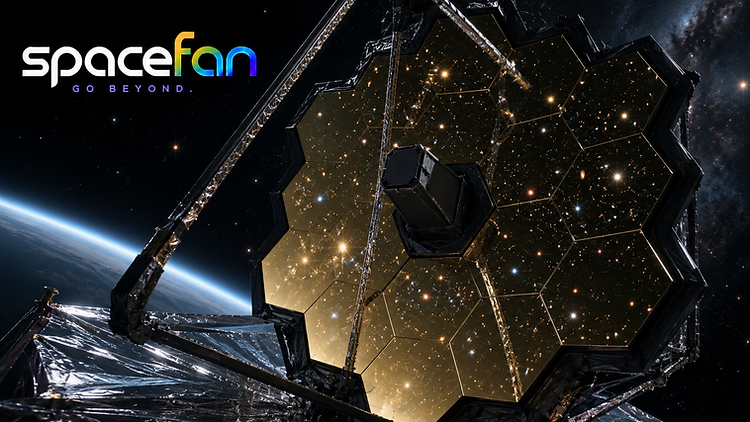
James Webb Space Telescope in space with its gold segmented mirror facing the stars.
Image · Space.Fan

The Drop

To understand how the universe began, scientists use massive computer simulations to recreate billions of years of history. A major challenge is tracking how light from the first s traveled through space to change the gas around them, a process called reionization. Tracking every beam of light is incredibly slow, even for the world's most powerful computers. To fix this, a team of researchers updated a computer program called Nyx. They built a new tool that uses clever shortcuts to track light, known as adaptive ray tracing. Instead of calculating every single light path in detail, the program now uses special filters to group similar light sources together. This helps the computer finish complex tasks much faster without losing accuracy. The team tested their new tool by running giant simulations using 4,096 powerful graphics processing units (GPUs). They successfully tracked how light changed clouds of gas and dark matter across a huge area of space. By making these programs faster, scientists can run more detailed tests to see how the early universe evolved.
Advertisement

Why It Matters

This improvement is a big deal because it allows scientists to study the universe in much higher detail than before. By speeding up these calculations, researchers can create better models of how the first s and galaxies formed. It helps them compare what they see in their simulations to what astronomers actually observe through powerful telescopes like the James Webb Space Telescope.
Advertisement

The Catch

While this tool is faster, it is still a computer model, not a direct observation of the early universe. The results depend on the assumptions the scientists put into their math. The team must still verify that these shortcuts work perfectly in every possible situation, especially in regions of space where gas is very thin or clumped together in unusual ways.

Put That in Perspective

Scientists have been trying to make these cosmic simulations faster for decades. This work is a step forward in moving from older computing methods to modern systems that use high-speed GPUs. Researchers plan to use this new version of Nyx for even larger and more complex projects to solve mysteries about the early history of space.

Source September 29, 2026
Nathan X. Marshak, Kathlynn Simotas, Zarija Lukić, Hyunbae Park, James Ahrens, Chris R. Johnson
University of Utah, Lawrence Berkeley National Laboratory, University of California Santa Barbara, Institute for Basic Science, University of Tsukuba, Los Alamos National Laboratory·The Astrophysical Journal·10.3847/1538-4357/ae9d6e

Keep Exploring Space