Advertisement
Space.Fan — Go Beyond
ApJ · 3 HR AGO
MissionsSIMULATION

Roman Space Telescope Sets Sights on Cosmic Mysteries

By Space.Fan Editorial Desk

Scientists are testing how NASA's upcoming telescope will map the universe to reveal the secrets of dark matter and dark energy.
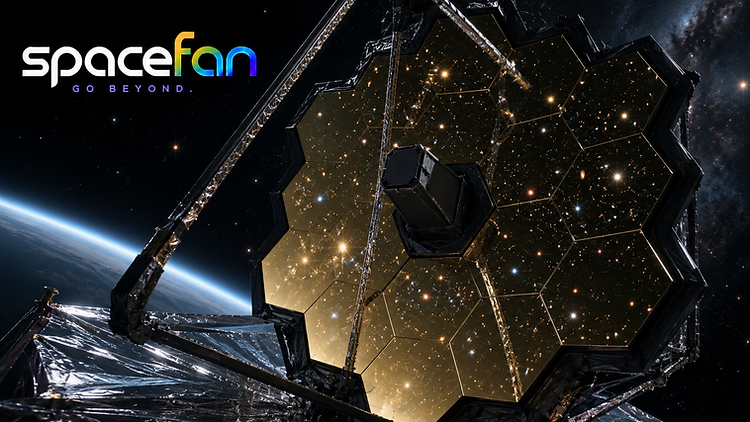
James Webb Space Telescope in space with its gold segmented mirror facing the stars.
Image · Space.Fan

The Drop

NASA is getting ready to launch the Nancy Grace Roman Space Telescope, a powerful new tool designed to peer deep into the cosmos. To make sure the telescope works perfectly, a team of researchers recently ran a giant digital test. They simulated the data the telescope will collect to see how well it can measure the structure of the universe. By creating a 'mock' survey, the team practiced how to use light from distant galaxies to understand the hidden forces that shape our space. The team used a complex mathematical method called a Fisher forecast to predict how well the telescope will perform. They compared this simulation to other high-level data models to confirm their work was accurate. The test looked at how light bends around massive objects, a phenomenon known as gravitational lensing, and how galaxies are spread out across space. This allows scientists to map out the 'dark' parts of our universe that we cannot see directly. The findings show that by combining three different ways of looking at galaxy data, the Roman Space Telescope will provide much clearer results than by using just one method alone. The team also tested how sensitive the telescope is to different types of errors, ensuring that they can tell the difference between actual cosmic signals and tiny measurement mistakes.
Advertisement

Why It Matters

This study is important because it proves the Roman Space Telescope will be a powerful tool for studying the expansion of the universe. By accurately measuring how galaxies cluster and how their light is stretched, scientists can calculate the strength of dark energy and the total amount of matter in space. This helps us refine our basic understanding of how the universe grew from a tiny point into the vast web of galaxies we see today.
Advertisement

The Catch

This research is based on a simulation, not actual telescope observations. The results depend on several assumptions about how galaxies behave and how well we can measure their distances. If these assumptions about galaxy physics are slightly off, or if the telescope's hardware performs differently than the math predicts, the final measurements could be slightly less precise than this study suggests.

Put That in Perspective

This work follows in the footsteps of previous space surveys that paved the way for modern cosmology. Scientists are already planning the next steps, which involve using these refined models to handle the massive amount of data the telescope will stream back to Earth once it begins its mission.

Source October 1, 2026
ApJ

Keep Exploring Space