Advertisement
Space.Fan — Go Beyond
ApJ · 7 DAYS AGO
DiscoveriesPEER REVIEWED

Scientists Find New Way Space Molecules Build Themselves

By Space.Fan Editorial Desk

Researchers have discovered a simple chemical reaction that helps create the building blocks for life in deep space.
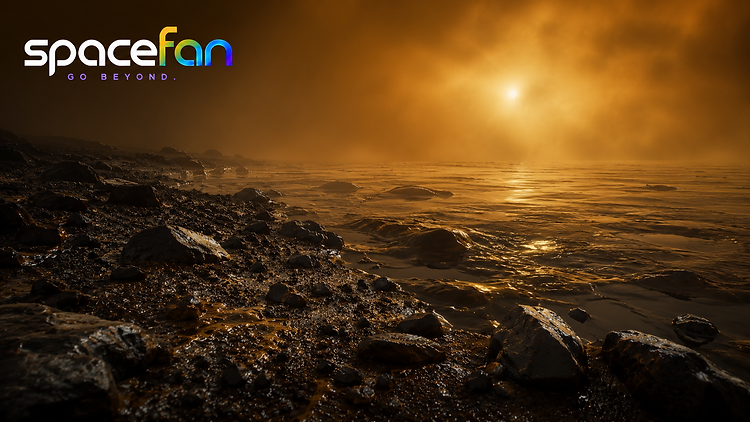
Dark rocky shoreline beside a golden hydrocarbon sea beneath Titan's thick orange haze.
Image · Space.Fan

The Drop

Space is not just empty cold; it is a giant chemical factory. Scientists have been trying to figure out how complex molecules grow in the dark, dusty clouds between s. These molecules, called N-PAHs, are made of carbon and nitrogen. They are very important because they serve as the building blocks for more complicated things like the atmosphere of Titan, one of Saturn's s, and the ingredients for life as we know it. To see how these molecules form, researchers used a special tool called an ion trap. This device acts like a tiny playground where scientists can watch individual molecules bump into each other in a controlled environment. By creating a vacuum, they can mimic the conditions found in the deep, freezing reaches of space. In this experiment, the team mixed pyrimidine cations with acetylene gas. They discovered that these two substances like to link up on their own, even at room temperature. This reaction happens very easily and does not require extra energy to t. It creates a new, larger molecule that was previously unknown in these environments. This finding is a big deal because it reveals a simple, natural pathway for building organic structures. By observing these reactions in the lab, scientists can confirm that these complex molecules can form much more easily in space than we previously thought.
Advertisement

Why It Matters

This discovery helps explain why we see so much nitrogen-based matter in space. Before this study, researchers had trouble explaining how these molecules became so common. By finding a reaction that happens spontaneously, they can now better model the chemistry of ary atmospheres and interstellar clouds.
Advertisement

The Catch

While this reaction works perfectly inside an ion trap in a lab, the conditions in space are much more complex. Real space environments have many other types of molecules, dust, and radiation that might change how these chemicals react. This study proves it is possible, but further research is needed to see if it happens the same way in the vast, messy chaos of a -forming cloud.

Put That in Perspective

Scientists have spent years looking for the missing ingredients in space. This study moves the focus from guessing how molecules form to actually seeing the process happen in a controlled, scientific setting.

Source September 5, 2026
ApJ

Keep Exploring Space