Space.Fan — Go Beyond
arXiv · 2 DAYS AGO
DiscoveriesEARLY RESEARCH

Shiny Lava Worlds: Why These Hot Planets Are Brighter Than Expected

By Space.Fan Editorial Desk

New research shows that extreme lava worlds are surprisingly reflective, likely because of clouds made of crushed rock.
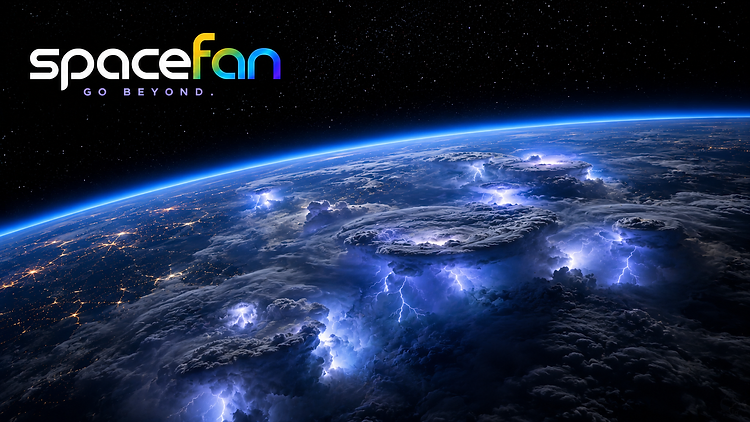
Massive thunderstorms flashing with lightning across Earth's cloud-covered atmosphere as seen from space.
Image · Space.Fan

The Drop

Astronomers have taken a closer look at a special group of s known as lava worlds. These s are so close to their host s that their surfaces are hot enough to melt rock into liquid lava. For a long time, scientists thought these worlds would be dark and charcoal-like, soaking up almost all the light that hits them. However, new data from the TESS space telescope tells a different story. By tracking the light these s reflect as they move in their orbits, researchers found that they are much shinier than predicted. This tells us that these s are not just bare, molten rocks, but likely have skies filled with clouds made of vaporized minerals. These clouds act like mirrors, bouncing light back into space before it can heat up the surface even more. The team studied several of these worlds, including 55 Cancri e and LTT 9779 b, using a special math technique to measure how much light they push away. This proves that these hellish worlds have active weather systems, even if that weather is made of glowing, metallic clouds rather than water.
Advertisement

Why It Matters

This discovery changes how we think about the atmospheres of s that orbit very close to their s. Before, experts were stuck trying to decide if these s stayed cool because they had thick air that moved heat around, or if they were just reflecting light away. This evidence suggests that high reflectivity, caused by these mineral clouds, is a key reason why some daysides stay cooler than expected. It helps scientists build better models for what happens to s when they are scorched by intense light.
Advertisement

The Catch

While the data is strong, scientists cannot see these s directly. They are relying on light curves, which are patterns of brightness that can be hard to interpret. It is possible that other things, like high-altitude dust or different types of gases, are also contributing to the brightness we see. More detailed observations are needed to be certain exactly what these mysterious clouds are made of.

Put That in Perspective

In the past, scientists mostly studied hot Jupiter planets, which are gas giants. Those planets usually look dark and dull. Seeing that smaller, rocky lava worlds behave differently and actually shine back at us is a big step forward. Future missions like PLATO will help us get even clearer pictures of these distant, shimmering worlds.

Source September 24, 2026
Brandon Park Coy, Michael Zhang, Fei Dai, Qiao Xue
·10.48550/arXiv.2609.26874

Keep Exploring Space