Advertisement
Space.Fan — Go Beyond
ApJ · 2 HR AGO
UniverseSIMULATION

Solving the Mystery of the Galaxy Center’s Glowing Strings

By Space.Fan Editorial Desk

Scientists used supercomputer models to figure out what is fueling the strange, giant ribbons of light near the heart of our galaxy.
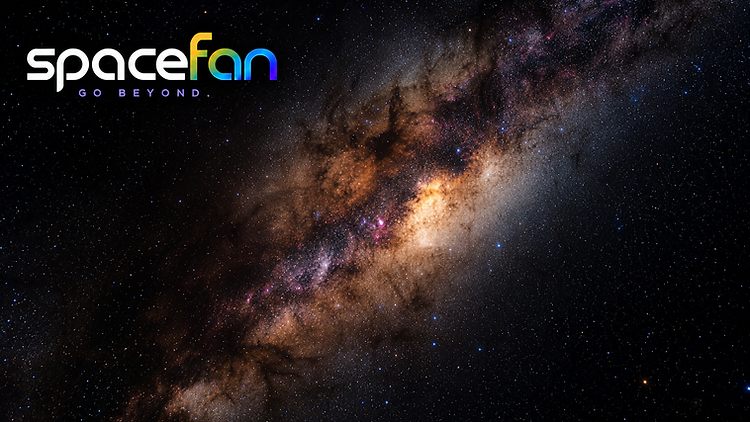
Dense star fields and glowing dust clouds across the center of the Milky Way galaxy.

The Drop

Right in the middle of our Milky Way galaxy, there are long, glowing structures that look like giant strings hanging in space. These strings are very long, stretching for many s. For a long time, astronomers have been trying to figure out what they are and how they light up. Some thought they might be powered by tiny, spinning s called pulsars that shoot out particles, while others thought they were created by massive shockwaves moving through space. To find the answer, researchers used a powerful computer tool called Athena++. This program acts like a laboratory inside a computer, letting scientists test how energy and particles move around the center of the galaxy. They programmed the computer to simulate different conditions, such as changing the strength of magnetic fields and the thickness of space gas. After running these experiments, the team compared their results to what telescopes have actually seen. They discovered that the models for both the pulsar theory and the shockwave theory produced results that looked almost the same. This means the current ideas we have might not tell the whole story. Because the results were so similar, the researchers realized that neither explanation might be the full truth. They now believe that these glowing ribbons might be created by the messy, turbulent nature of the gas near the galactic center. This suggests that the way gas swirls and crashes together could be the true secret behind the light.
Advertisement

Why It Matters

Understanding these glowing strings is like solving a puzzle piece of our galaxy's history. If we know what fuels these structures, we learn more about how energy flows in the crowded, chaotic area around the supermassive at the center of the Milky Way. This research is important because it shows that our current scientific models might be missing some of the complexity of deep space. By ruling out simple explanations, scientists can now focus on the role of turbulence, which helps us understand how the center of a galaxy acts as a giant engine for particles and light.
Advertisement

The Catch

This study is based on computer models, which are digital versions of reality rather than direct photographs of the process. Because these models have to make assumptions about how space works, they might not capture every tiny detail of the real environment near the galactic center. The researchers noted that they still have more work to do to prove that turbulence is definitely the cause.

Put That in Perspective

Astronomers have been studying these filaments for years, but this is the first time they have used detailed computer simulations to test these specific origin theories side-by-side. The next step will be to create even more complex simulations that account for more of the random, turbulent motion of gas in the region to see if the observations match perfectly.

Source September 26, 2026
ApJ

Keep Exploring Space