Advertisement
Space.Fan — Go Beyond
ApJ · 2 HR AGO
UniverseSIMULATION

Teaching AI to Map the Early Universe

By Space.Fan Editorial Desk

Researchers are using new AI tools to build 3D maps of the baby universe using faint hydrogen signals.
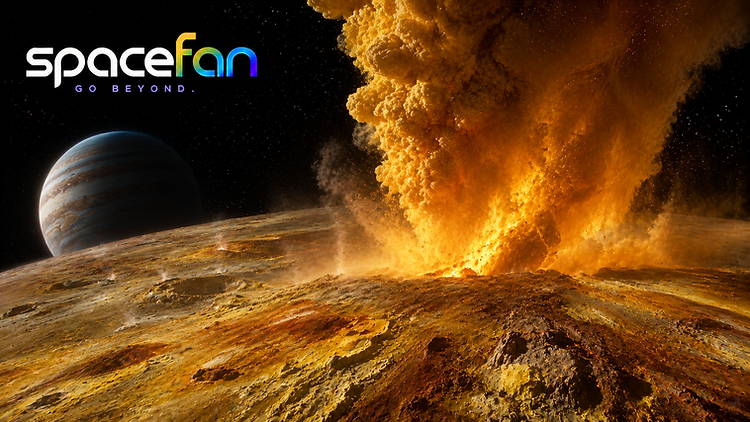
Huge volcanic eruption on the orange surface of Io with Jupiter visible in space behind it.
Image · Space.Fan

The Drop

Scientists are trying to understand what the universe looked like billions of years ago. To do this, they look for a special light signal coming from hydrogen gas. This signal is called the 21 cm line. It acts like a fossil from the time when the first s were beginning to light up the dark sky. Studying these signals is very hard because they are extremely faint and mixed with interference. To make sense of the data, researchers Bin Xia and John H. Wise used a type of computer program called a conditional diffusion model. This is the same kind of smart technology used to create images in art programs, but here, it is used to build scientific models of space. The team trained their computer model using over 25,000 examples of what the early universe might have looked like. By teaching the AI to recognize patterns, they hoped it could create accurate 3D maps of gas distribution across vast distances in space. This helps them simulate the history of the universe more efficiently than older computer methods. The researchers compared their new 3D model against simpler 2D versions. They found that while 3D modeling is much more difficult for computers to handle, it does a better job at showing certain patterns of how gas is clumped together in the deep reaches of space.
Advertisement

Why It Matters

This research is important because it gives scientists a new way to test their theories about how the universe evolved. By building better AI emulators, experts can quickly simulate millions of possible scenarios for the early universe. This helps them predict what we might see when we use the next generation of giant radio telescopes to observe the real sky.
Advertisement

The Catch

While the 3D model is impressive, it is not perfect. The researchers discovered that the 3D version did not always beat the 2D version at every task. The AI still struggles to correctly capture the very small, detailed structures in the gas. Because the math involved is so complex, the computer model still has some biases that need to be fixed before it can be used to interpret real data from deep space.

Put That in Perspective

In the past, scientists relied on slower, traditional computer simulations to guess the structure of the early universe. This new AI approach is a big step toward making these calculations faster. Researchers plan to use this as a starting point to build even more powerful models that can account for realistic interference and noise found in real telescope observations.

Source September 30, 2026
Bin Xia, John H. Wise
Georgia Institute of Technology·The Astrophysical Journal·10.3847/1538-4357/ae9cb3

Keep Exploring Space