
Advertisement
Space.Fan — Go Beyond
ApJ · 26 MIN AGO
DiscoveriesMODEL

A Mysterious Glow Found on a Lonely Brown Dwarf

By Space.Fan Editorial Desk

Scientists are trying to solve why a cool, planet-like object is heating up its own atmosphere from the outside.
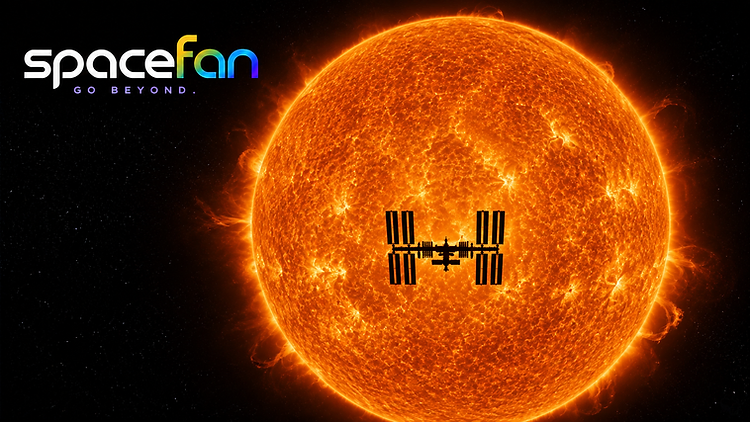
Silhouette of the International Space Station crossing in front of the bright orange Sun.
Image · Space.Fan

The Drop

A lonely object in space called W1935 is acting in a way that confuses astronomers. W1935 is a type of object called a brown dwarf. It is larger than a like Jupiter but smaller than a . Usually, these objects cool down as they get older. However, space scientists using data from the James Webb Space Telescope noticed something strange. The top of its atmosphere is much warmer than it should be. To figure out why, researchers used a computer model to simulate the atmosphere of the brown dwarf. They needed to find out how much energy would be required to create this extra heat. The models showed that the atmosphere is getting a significant amount of energy from somewhere outside of the itself. This discovery was made by studying the light coming from the brown dwarf. The telescope spotted a specific chemical signature called methane. Methane usually shows up in a certain way in these environments, but on W1935, it appeared as an emission, which tells scientists that the atmosphere has a weird temperature setup where it gets hotter higher up instead of colder.
Advertisement

Why It Matters

Understanding this energy boost is a big deal because it reveals that brown dwarfs might be more active than we once thought. It confirms that these worlds are not just floating, cooling balls of gas. They might have powerful weather or magnetic energy that we do not fully understand yet. This also helps scientists rule out simple theories. By calculating exactly how much energy is needed, researchers now know that current ideas about auroras on brown dwarfs might not be enough to explain what is happening here. It points to a more complex process that could be similar to things we see in our own solar system, like how the sun affects ary atmospheres.
Advertisement

The Catch

While the computer models explain what the telescope saw, they are still just simulations. The team does not know the exact source of the heat. It could be something like huge electrical storms, or even something as unexpected as the brown dwarf running into space rocks or s. Because they cannot travel to the object, they have to rely on these models, which means there could be other explanations that have not been thought of yet.

Put That in Perspective

In the past, scientists thought brown dwarfs were relatively quiet objects. Now, with the power of the James Webb Space Telescope, we are seeing that they have complicated atmospheres with hidden energy sources. Future studies will likely look for even more chemical signatures to see if there are other clues hidden in the light.

Source September 28, 2026
ApJ

Keep Exploring Space