Advertisement
Space.Fan — Go Beyond
arXiv · 8 DAYS AGO
UniverseEARLY RESEARCH

A New Super-Tool for Simulating the Birth of the Universe

By Space.Fan Editorial Desk

Scientists have released a unified, powerful new computer code to help unlock the secrets of how galaxies and stars evolve over billions of years.
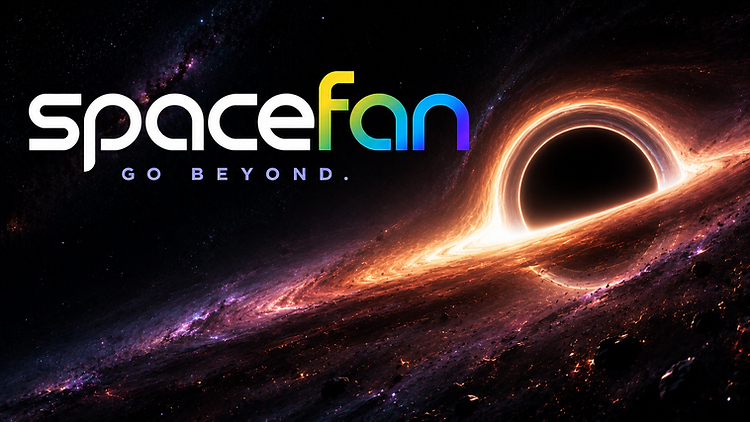
A black hole with a glowing accretion disk in deep space.
Image · Space.Fan

The Drop

To understand how the universe began and grew, scientists build giant digital maps of space. For years, they have used a computer program called Gadget to simulate gravity and the movement of gas. However, because many researchers kept changing the code for their own projects, it became hard to keep track of fixes or share results. This created a mess where different scientists were using slightly different versions of the same tool. Now, a team of researchers has launched OpenGadget3. This new release takes all those different pieces and brings them back together into one single, organized system. It is like taking a messy pile of puzzle pieces and putting them together into a complete, clear picture. This new code is built to run on some of the world's fastest supercomputers. It uses advanced math to track everything from how s grow to how dust forms in space. By using this tool, scientists can run better tests to see if their ideas about the early universe actually match what we see in the night sky today. The tool is designed to be very careful. It helps researchers track exactly which settings were used in every simulation. This makes it much easier for other scientists to double-check their work and be sure the results are accurate.
Advertisement

Why It Matters

Scientific progress relies on being able to reproduce experiments. If two scientists get different answers from the same data, they need to know why. By providing a standard, well-documented tool, OpenGadget3 helps ensure that when researchers report a discovery about a galaxy or a , other experts can verify it easily. It turns a fragmented group of tools into a reliable standard for the entire scientific community. Furthermore, this tool helps us understand the hidden physics of the cosmos. By simulating complicated things like magnetic fields and dark matter, scientists can compare their digital models to observations from telescopes. This brings us one step closer to solving the mysteries of how our universe transformed from a hot, dense state into the galaxies we see today.
Advertisement

The Catch

While this code is a big step forward, it is still just a model. Computer simulations are only as good as the math and data we put into them. If there is a part of physics we do not fully understand yet, the simulation might miss it or get it wrong. It is a powerful lens for looking at the universe, but it cannot perfectly recreate reality.

Put That in Perspective

The original Gadget codes have been a staple of space science for many years. This release is part of a growing trend in science to make code open and easy for anyone to check. It represents a massive effort by 30 scientists to bring order to a field that was becoming too complex to manage alone.

Source September 17, 2026
Klaus Dolag, Geray S. Karademir, Luca Tornatore, Antonio Ragagnin, Milena Valentini, Ludwig M. Böss, Frederick Groth, Giuseppe Murante, Stefano Borgani, Volker Springel, Cenanda Arido, Javier Badía, Tiago Castro, Alice Damiano, Laura Di Federico, Moritz S. Fischer, Gian Luigi Granato, Nitya Hariharan, David Klemmer, Umberto Maio, Tirso Marin-Gilabert, Ilaria Marini, Yashraj Patil, Margarita Egelhofer, Cinthia Ragone-Figueroa, Luca Sala, Cecilia Scannapieco, Ludwig D. Schmidt, Ulrich P. Steinwandel, Giovanni Tedeschi-Prades, Marc Wiertel
·10.48550/arXiv.2609.17658

Keep Exploring Space