Advertisement
Space.Fan — Go Beyond
ApJS · 11 MIN AGO
UniversePEER REVIEWED

A New Treasure Map for the Deep Universe

By Space.Fan Editorial Desk

Astronomers are using the James Webb Space Telescope to create a giant new map of distant, hidden galaxies.
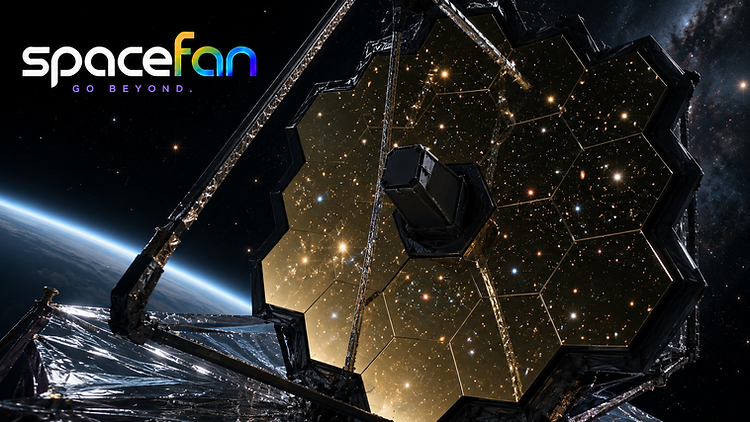
James Webb Space Telescope in space with its gold segmented mirror facing the stars.
Image · Space.Fan

The Drop

A team of scientists is ting a major project called MINERVA using the James Webb Space Telescope. They are looking at four specific patches of the sky that astronomers have studied for a long time. By using ten special filters on the telescope, they can see light that other cameras might miss. This allows them to capture clearer pictures of objects that have been hiding in the dark corners of space. The team is using two main tools on the telescope: NIRCam, which sees near-infrared light, and MIRI, which sees mid-infrared light. These tools work together like a pair of high-powered glasses. By taking very long exposures of these fields, they are collecting much more detail than before. This project covers an area about seven times larger than previous similar studies. So far, the project has already gathered a huge amount of data. This information helps create a detailed catalog of thousands of distant galaxies. It gives researchers a better way to measure how heavy these galaxies are and how fast they make new s. This survey acts like a foundation for many other science projects that will happen in the coming years.
Advertisement

Why It Matters

This project is a big deal because it fixes errors in how we measure galaxies. Before this, it was hard to tell exactly how much mass a distant galaxy had. By using more filters, scientists can now get much more accurate numbers. This helps them understand how galaxies grow and change as the universe gets older.
Advertisement

The Catch

While this data is very precise, it is still just a map of specific areas. It does not cover the entire sky, so it might not represent all types of galaxies that exist in other places. Also, because the galaxies are so far away, they appear as small points of light, making it difficult to see every detail of their structure.

Put That in Perspective

Astronomers have been studying these four patches of sky for years using older telescopes. Adding the power of the James Webb Space Telescope is like moving from a blurry black-and-white photo to a high-definition color movie. Researchers plan to use this data to pick the best targets for future studies with even more advanced equipment.

Source November 24, 2026
Adam Muzzin, Katherine A. Suess, Danilo Marchesini, Luke Robbins, Chris J. Willott, Stacey Alberts, Jacqueline Antwi-Danso, Yoshihisa Asada, Gabriel Brammer, Sam E. Cutler
York University, University of Colorado, Tufts University, NRC Herzberg, Space Telescope Science Institute, University of Toronto, Saint Mary’s University, Kyoto University, Waseda University, Cosmic Dawn Center, Niels Bohr Institute, University of Massachusetts, Columbia University, Swinburne University of Technology, University of Ljubljana·The Astrophysical Journal Supplement Series·10.3847/1538-4365/aea979

Keep Exploring Space