Advertisement
Space.Fan — Go Beyond
ApJ · 5 HR AGO
UniverseMODEL

A New Way to Fingerprint Radio Signals from Deep Space

By Space.Fan Editorial Desk

Scientists have found a better way to tell two similar-looking types of space radiation apart to study powerful cosmic events.
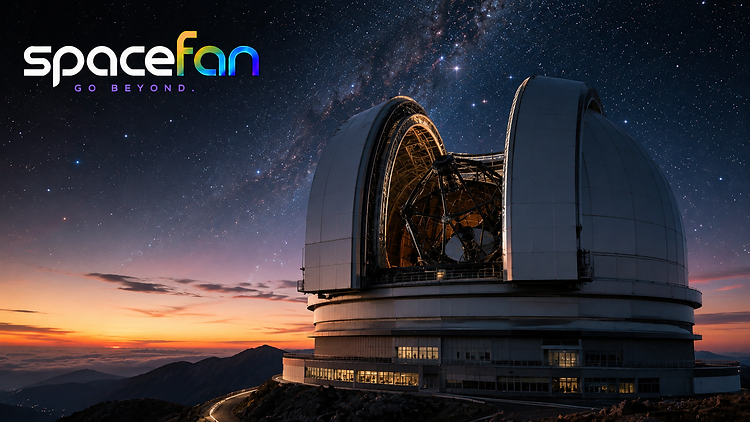
Large astronomical telescope inside an open mountain observatory dome beneath a star-filled night sky.
Image · Space.Fan

The Drop

Space is filled with radio waves that act like fingerprints for massive energy events, such as exploding s or solar flares. Two common types of these signals are called synchrotron maser emission and spontaneous synchrotron emission. While they both come from electrons moving in magnetic fields, they carry different messages about the environment where they were created. Researchers at the Purple Mountain Observatory decided to compare these signals by building a detailed computer model of how they behave under the same conditions. By watching how these signals grow and change, the team found clear differences in how the light looks when it arrives at our telescopes. The most important difference is in the shape of the signal. The maser-style signal is usually more narrow and symmetric, acting like a cleaner, sharper peak on a graph compared to the standard, messy version of synchrotron light. They also discovered that these signals react differently depending on the angle from which we view them in space.
Advertisement

Why It Matters

Being able to tell these two signals apart is a big deal for astronomers because it helps them identify what is happening in the extreme, high-energy areas of the universe. If we know the exact source of a radio blast, we can better understand the magnetic fields and particle speeds involved in things like solar storms or distant cosmic jets. This gives scientists a new diagnostic tool, similar to how a doctor uses different types of scans to see inside the human body. It turns the confusing noise of space into a readable map of physical processes.
Advertisement

The Catch

This research is based on computer models rather than direct observations of a specific object. Because the study relies on simulations, it assumes certain ideal physical conditions that might be more chaotic in the real, messy environment of deep space. Further, the study only considered a few specific viewing angles, meaning that signals coming from other directions might look different or harder to distinguish in actual practice.

Put That in Perspective

Astronomers have long struggled to classify the exact mechanisms behind mysterious radio bursts. This work provides a new mathematical blueprint that researchers will likely use to cross-reference against data from current radio telescopes to see if their model matches real-world observations.

Source October 2, 2026
Lijie Zhang, Dejin Wu, Ling Chen, Zongjun Ning
Purple Mountain Observatory, Chinese Academy of Sciences, University of Science and Technology of China·The Astrophysical Journal·10.3847/1538-4357/aea084

Keep Exploring Space