Advertisement
Space.Fan — Go Beyond
ApJ · 6 HR AGO
DiscoveriesSIMULATION

Scientists Use Simulation to Understand Early Galaxy Light

By Space.Fan Editorial Desk

A computer model helps scientists see how early galaxies let light escape into the universe, like a digital twin of real galaxies.
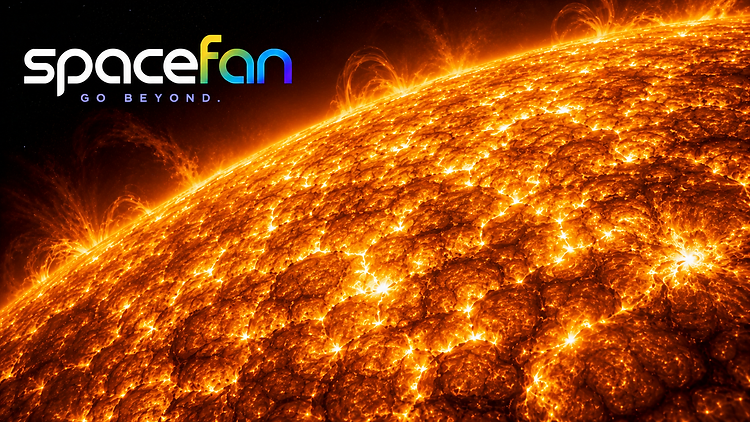
Close-up of the fiery Sun showing bright active regions and looping plasma above its surface.
Image · Space.Fan

The Drop

Scientists have created a powerful computer model to understand how light from the very first galaxies traveled into space. They used a simulation of a virtual galaxy, about as massive as 109 million suns, to see how certain gases, like silicon and carbon, let light escape. They looked at these gases in the simulation and compared them to real observations from the Hubble Space Telescope. The Hubble data looked at light from 58 different galaxies. The simulation was able to show similar patterns in the gas and light as the real galaxies, even when they grouped the real galaxies by size and used different ways to average their light. This computer model acts like a digital twin, helping scientists understand what they are seeing in real, distant galaxies. It's especially helpful for faint signals where it's hard to get clear information. The simulation showed that the way light escapes is linked to how big the galaxy is, how fast it's making new s, and how much light gets out. Interestingly, the simulation found that the most light escapes when galaxies are going through intense bursts of -making. This suggests that these active periods create the variety of gas and light we see in young, -forming galaxies. The model helps us estimate how much light escapes, which is important for understanding the early universe.
Advertisement

Why It Matters

This work gives scientists a new way to understand the early universe. By using computer simulations, they can get a clearer picture of how light escaped from the first galaxies. This is crucial because that escaping light is what eventually allowed us to see everything in the universe today. Understanding how much light escapes and why helps scientists piece together the history of the universe. It confirms that the gas and light patterns seen in observations are real and can be recreated with models, giving us more confidence in our understanding of these distant objects.
Advertisement

The Catch

The simulation used a model of just one virtual galaxy. While it matched real observations well, it's important to remember that it's still a model. It might not perfectly represent every single galaxy that existed in the early universe. The results are based on this specific simulation, and more work is needed to see if these findings hold true for a wider variety of simulated galaxies.

Put That in Perspective

This study uses a computer model to interpret observations from the Hubble Space Telescope. It's like using a very detailed map to understand a photograph of a faraway land. Scientists can now use this method to study even more galaxies from the early universe, helping them to better understand a time when the universe was just beginning to light up.

Source October 2, 2026
ApJ

Keep Exploring Space