Advertisement
Space.Fan — Go Beyond
AJ · 9 MIN AGO
DiscoveriesPEER REVIEWED

A New Way to See Exoplanet Details More Clearly

By Space.Fan Editorial Desk

Scientists have found a better way to filter out starlight interference, allowing us to spot the secrets of distant planets much faster.
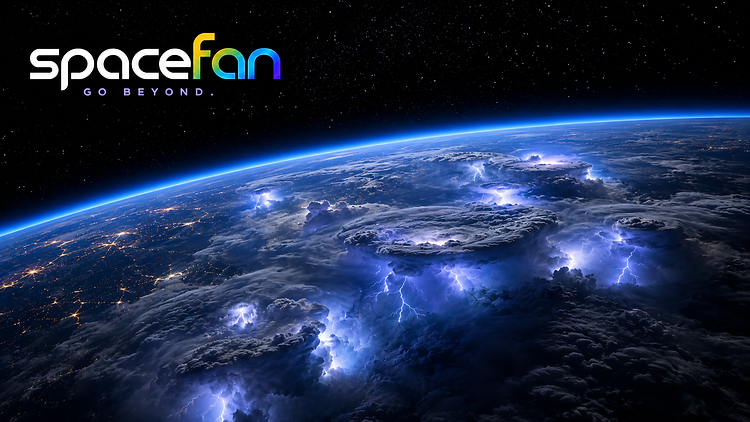
Massive thunderstorms flashing with lightning across Earth's cloud-covered atmosphere as seen from space.
Image · Space.Fan

The Drop

When we hunt for exos, we watch them pass in front of their s. This is called a transit. As a crosses the , it blocks a tiny bit of light. By measuring this dip in brightness, we can learn about the 's atmosphere. However, there is a problem. s are not just flat, bright circles. They are often darker at the edges than in the middle, a effect called limb darkening. This makes it hard to tell the difference between the blocking light and the just being naturally dimmer at the edges. Because scientists have to guess how the looks, they often get blurry results. Researchers at MIT decided to test a new approach to solve this mystery. They used more than 500,000 computer simulations of s to see how different math models affect what we see. They discovered that the old math, known as the quadratic law, often tricks us. It can make a flat atmosphere look like it has features that are not actually there. By using better math, like third or fourth-order equations, the team found they could clear up the confusion. These improved models act like a better pair of glasses for our telescopes. They allow us to see the true signal of the without the 's edge distortion getting in the way. This new method is much more efficient. By using these tighter math models, scientists can get the same amount of information from just one to three transits that used to take six. This saves precious time on big telescopes, allowing us to study more s in the same amount of time.
Advertisement

Why It Matters

This study matters because telescope time is extremely expensive and limited. Every hour on a major space telescope is fought over by thousands of astronomers. By making our data analysis smarter, we can do more science without needing to build bigger, more expensive telescopes right away. Furthermore, this discovery helps us avoid mistakes. In the past, scientists might have thought they saw water vapor or clouds on a , when they were actually just seeing a math error caused by the 's edge. This new way of processing data keeps our results honest and accurate.
Advertisement

The Catch

While this new approach helps, it is not a perfect fix. All of these results still depend on the quality of the models we use. If our basic understanding of how s burn and shine is slightly off, the new math will still carry those errors forward. Additionally, this work focuses on specific types of s, and the results might change slightly depending on the type of a is orbiting.

Put That in Perspective

Historically, astronomers have used simpler math formulas to save computing power. As our telescopes get better, like those used by the James Webb Space Telescope, we have reached a point where the old math is no longer good enough. Researchers are now looking to test these new formulas on real data from space missions to confirm these speed and accuracy gains.

Source November 22, 2026
Samson J. Mercier, Julien de Wit, and Benjamin V. Rackham
Massachusetts Institute of Technology·The Astronomical Journal·10.3847/1538-3881/aebb25

Keep Exploring Space