Advertisement
Space.Fan — Go Beyond
ApJ · 2 HR AGO
UniversePEER REVIEWED

A New Way to Spot Hidden 'Bars' in Distant Galaxies

By Space.Fan Editorial Desk

Scientists created a new computer tool to find the glowing star-filled bars hidden deep within the oldest galaxies in our universe.
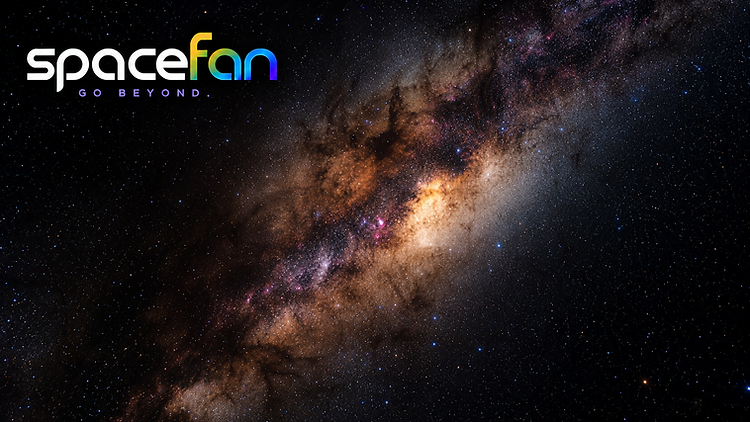
Dense star fields and glowing dust clouds across the center of the Milky Way galaxy.
Image · Space.Fan

The Drop

Many spiral galaxies, like our own Milky Way, have a long, straight structure in their center made of s. Astronomers call these features galactic bars. These bars act like traffic controllers, moving gas toward the center of the galaxy to help create new s. Finding these bars in galaxies that are very far away is difficult because the light gets dim and blurry over such long distances. To solve this, a team of researchers built a new computer program to scan images of distant galaxies. They tested their program by taking high-quality pictures of nearby galaxies and blurring them to look like they were millions of s away. This let them see how many bars they were missing and how to spot them more accurately. The team compared two different ways to measure these galaxy shapes. They found that using a mathematical tool called ellipse fitting worked much better than other methods. It was more reliable when looking at images from the Hubble and James Webb space telescopes. By using this new method, researchers can now identify bars in galaxies that were previously too faint or fuzzy to study. This gives us a much clearer picture of how galaxies change and grow over billions of years.
Advertisement

Why It Matters

Understanding how many bars exist in the early universe helps us learn how galaxies evolve over time. Because bars push gas into the center of a galaxy, they can spark the birth of new s or feed the at the core. Knowing how these bars formed in the early universe provides a timeline for how galaxies become the mature shapes we see today.
Advertisement

The Catch

While this new method is a big step forward, it is not perfect. The researchers found that their technique can still slightly underestimate how long these bars are because the light from the edges of the bars is often very faint. They had to create special correction steps to account for this missing light, which means our current numbers are still based on estimates rather than direct, crystal-clear views.

Put That in Perspective

In the past, astronomers struggled to compare ancient galaxies to nearby ones because the blurry, distant images made them look totally different. This new study helps bridge that gap by creating a standard 'translator' for these images, allowing us to compare the history of the universe across billions of years of cosmic time.

Source November 23, 2026
Yi-Xiao Lyu, Luis C. Ho, Zhao-Yu Li, Ming-Yang Zhuang
Peking University, Shanghai Jiao Tong University, University of Illinois Urbana-Champaign·The Astrophysical Journal·10.3847/1538-4357/aeb11a

Keep Exploring Space