
A Pulsar Is Changing Form as It Ages
Scientists have spotted a space object that appears to be growing a glowing cloud, marking a new stage in its life.

The Drop
Why It Matters
The Catch
Put That in Perspective
Researchers were curious if these two parts of the source were related or just sitting near each other by chance. By creating this model, they now have a better way to test other similar space objects. Future observations could look for more pulsars that are caught in this same transitional stage.
Keep Exploring Space


Webb Telescope Reveals Secrets of a Star's Dusty Explosion
New infrared images of a famous supernova remnant show how dead stars scatter the building blocks for new worlds.


A Distant Galaxy's Giant Black Hole Shows Strange X-Ray Mood Swings
Astronomers watched a massive black hole suddenly dim, revealing how cosmic winds and fuel changes block its bright light.

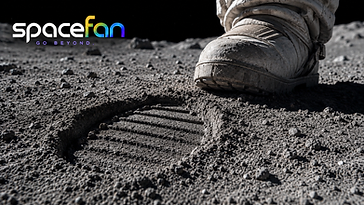
NASA Plans First Moon Nuclear Reactor to Power Future Lunar Bases
NASA is looking for partners to build a small nuclear power plant to keep the lights on for astronauts living on the Moon.


Why Is Earth Missing So Much Carbon? A New Clue From Deep Space
Scientists discovered that a young star system might be 'burning off' carbon, helping explain why our own planet lacks this essential element.