
Why Is Earth Missing So Much Carbon? A New Clue From Deep Space
Scientists discovered that a young star system might be 'burning off' carbon, helping explain why our own planet lacks this essential element.

The Drop
Why It Matters
The Catch
Put That in Perspective
Researchers were surprised by the amount of carbon-chain chemistry in the outer parts of the disk. This suggests that the winds blowing away from a young star are more important for distributing materials than previously thought. Future studies will likely look at whether these same processes help form the organic ingredients found in meteorites and asteroids.
Keep Exploring Space


Mapping the Moon's Mysterious 'Elephant Hide' Terrain for Artemis
Scientists are using new technology to spot tricky lunar ground that could impact where future astronauts land on the Moon.

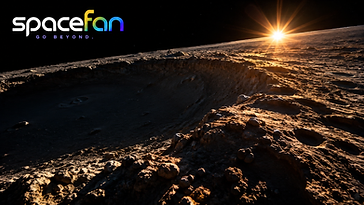
Moon Craters Are Shallower in Its Darkest Corners
New high-resolution images show that small craters in the Moon's cold, shadowed regions are shaped differently than those in sunny areas.


A Distant Galaxy's Giant Black Hole Shows Strange X-Ray Mood Swings
Astronomers watched a massive black hole suddenly dim, revealing how cosmic winds and fuel changes block its bright light.


AI Helps Scientists Map the Universe with New Precision
Researchers are using artificial intelligence to sharpen our view of the early universe's oldest light patterns.