Advertisement
Space.Fan — Go Beyond
AJ · 18 HR AGO
DiscoveriesPEER REVIEWED

Are Giant Planets Being Eaten by Their Stars?

By Space.Fan Editorial Desk

New research suggests that massive planets orbiting close to their stars might be safer than we previously thought.
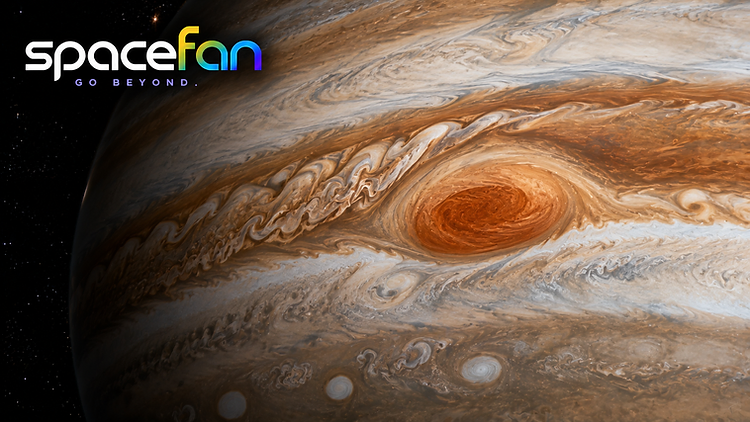
Jupiter's Great Red Spot storm visible from space.
Image · Space.Fan

The Drop

Hot Jupiters are huge, gas-filled s that orbit incredibly close to their parent s. Because they are so close, gravity pulls on them in powerful ways. For a long time, astronomers believed these s were slowly spiraling inward to be destroyed, or 'eaten,' by their s due to tidal forces. This would mean that old s should have fewer of these s than young s. To test this idea, researchers looked at the speed and movement of s that host these giant s. In the past, some scientists thought that because these s moved differently, it meant the s were being destroyed over time. By using better data and looking at how s move in different directions, the team took a second look at these claims. They used data from the TESS space telescope to find new, distant giant s. When they compared the movement of these s to regular s in our galaxy, they found no big difference. Even when they looked at the hottest, most vulnerable giant s, the results were the same. This study shows that many of the signs we thought pointed to destruction might have been misinterpreted. It suggests that a large number of these gas giants are not disappearing as quickly as once suspected during the main part of a 's life.
Advertisement

Why It Matters

Understanding if s survive near their s helps us learn how solar systems grow and change. If hot Jupiters were constantly being destroyed, it would mean our models of how s form and move are missing a big piece of the puzzle. This discovery suggests that the life cycle of these extreme worlds is more stable than we believed. It confirms that the evidence used in earlier studies was likely influenced by how we measure the age of s, rather than actual evidence of s being shredded by gravity.
Advertisement

The Catch

While this study casts doubt on the idea that many giant s are being destroyed, it does not prove they are perfectly safe forever. It only shows that there is no strong evidence for rapid destruction during the 's main life cycle. Measuring the exact age and history of s is very difficult, and small errors in those measurements could still impact the final results.

Put That in Perspective

Scientists have studied these giant, nearby planets for decades. Future missions will likely focus on gathering even better data on star movements to settle this debate once and for all.

Source September 20, 2026
AJ

Keep Exploring Space