
Advertisement
Space.Fan — Go Beyond
arXiv · 2 DAYS AGO
UniverseEARLY RESEARCH

Astronomers Watch a Distant Galaxy Core Feeding on Gas

By Space.Fan Editorial Desk

Scientists have spotted a rare, active feeding frenzy where a supermassive black hole is gulping down massive amounts of surrounding gas.
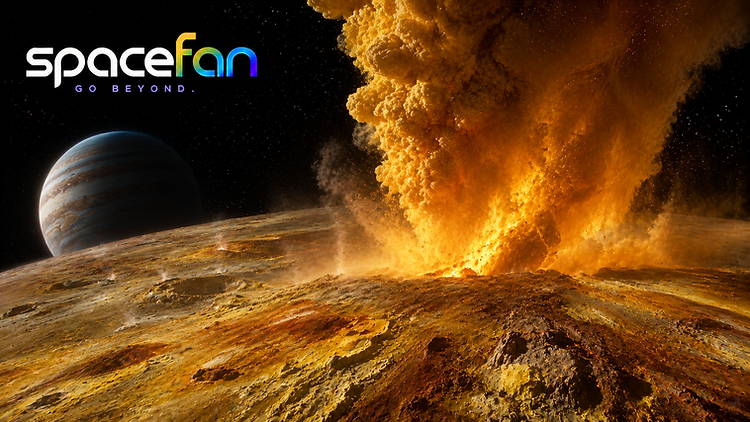
Huge volcanic eruption on the orange surface of Io with Jupiter visible in space behind it.
Image · Space.Fan

The Drop

Researchers using the Dark Energy Spectroscopic Instrument have been studying a bright, distant object known as a quasar. This object is the center of a galaxy that acts like a cosmic engine, fueled by a giant . By looking at the light coming from this galaxy, the team noticed that certain patterns in the light changed over just ten months. These changes suggest that clouds of gas are moving toward the center of the galaxy in a process called inflow. To confirm what they were seeing, the team also used the Einstein Probe, a special telescope designed to detect X-rays. They found that the quasar was dimmer in X-rays than expected, which points to thick clouds of gas blocking our view. These observations help paint a picture of a galaxy that likely had a violent collision with another galaxy, leaving it with a fresh supply of gas to feast on.
Advertisement

Why It Matters

This discovery is a big deal because it helps scientists understand how galaxies grow. By seeing gas falling into a in real-time, researchers can confirm theories about how these giant objects get their fuel. It suggests that some galaxies might go through sudden, active eating phases, especially after they crash into each other.
Advertisement

The Catch

While the evidence points to gas moving inward, astronomers have not directly imaged the gas clouds because they are too far away and too small. The current findings rely on interpreting patterns in light, and it is possible that other complex processes near the are contributing to the light changes we see.

Put That in Perspective

This quasar is a unique case that shows us a snapshot of a galaxy's life cycle. Researchers plan to keep tracking this object to see if the gas feeding continues, which could help them understand how long these active 'meal' phases last.

Source September 23, 2026
Xihan Ji, Dominic J. Walton, Francesco D'Eugenio, Ignas Juodžbalis, Vasily Belokurov, Andrew C. Fabian, Roberto Maiolino, Jiamu Huang, Douglas N.C. Lin
MNRAS·10.48550/arXiv.2609.25224

Keep Exploring Space