
Advertisement
Space.Fan — Go Beyond
AJ · 2 HR AGO
DiscoveriesPEER REVIEWED

Checking the Extreme Orbit of Planet HD 80606 b

By Space.Fan Editorial Desk

Scientists used the James Webb Space Telescope to study a wild, oval-shaped orbit around a distant star.
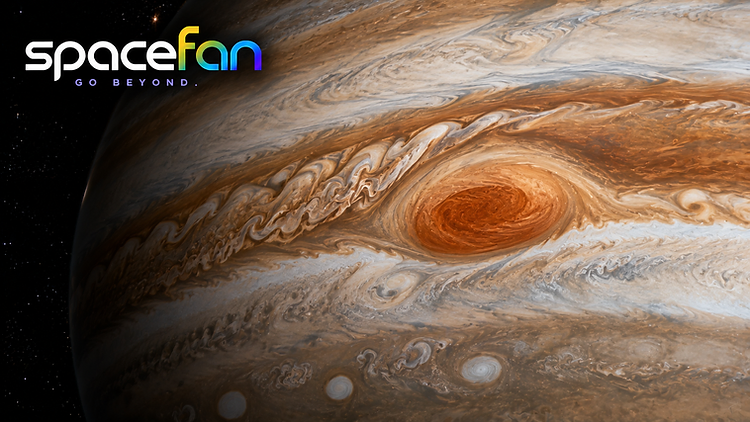
Jupiter's Great Red Spot storm visible from space.
Image · Space.Fan

The Drop

Astronomers have been studying a called HD 80606 b, which is a gas giant about four times larger than Jupiter. This is special because it does not have a circular orbit like Earth. Instead, it follows a very stretched, oval path that takes it very close to its and then far away again. Scientists wanted to see if anything was pulling on the to change its path over time. To find out, the team used the powerful James Webb Space Telescope to watch the pass behind its , an event called an eclipse. By measuring the exact time the disappeared and reappeared, they could check if its orbit was shifting. They also looked at twenty-five years of data that tracked the 's movement. This helped them see if the 's speed or path had changed since it was first discovered. The researchers were looking for signs of a second hidden or other forces that might tug on the gas giant. Their results show that the 's orbit is very stable. The timing of the eclipse matched what scientists expected, meaning there are no big, secret forces or mysterious extra s disrupting its path right now.
Advertisement

Why It Matters

This study is important because it helps scientists understand how s keep their orbits over long periods. By ruling out large hidden neighbors and confirming the stability of the 's path, researchers can be more confident in their models of how solar systems form and change.
Advertisement

The Catch

While the team did not find evidence of a second , this does not mean one definitely does not exist. A smaller could still be hiding in a place where our current tools cannot easily detect it. Future observations with even better precision may be needed to be completely sure.

Put That in Perspective

Scientists have studied this planet for over two decades. Earlier predictions about the planet's timing were slightly off, but the new, better data from the James Webb Space Telescope helps correct those old estimates, making our map of this distant system much more accurate.

Source September 27, 2026
Charles Beichman, Billy Quarles, B. J. Fulton, Nikole Lewis, Ryan Challener, Julien de Wit, Malena Rice, Julie Inglis, Tiffany Kataria
NASA Exoplanet Science Institute, Jet Propulsion Laboratory, California Institute of Technology, East Texas A&M University, Cornell University, Massachusetts Institute of Technology, Yale University, University of California San Diego·The Astronomical Journal·10.3847/1538-3881/ae9a8c

Keep Exploring Space