Advertisement
Space.Fan — Go Beyond
arXiv · 7 DAYS AGO
UniverseSIMULATION

Clearing the Cosmic Fog to See the Early Universe

By Space.Fan Editorial Desk

Scientists use powerful computer simulations to clean up blurry data and better map the gas hidden in space.
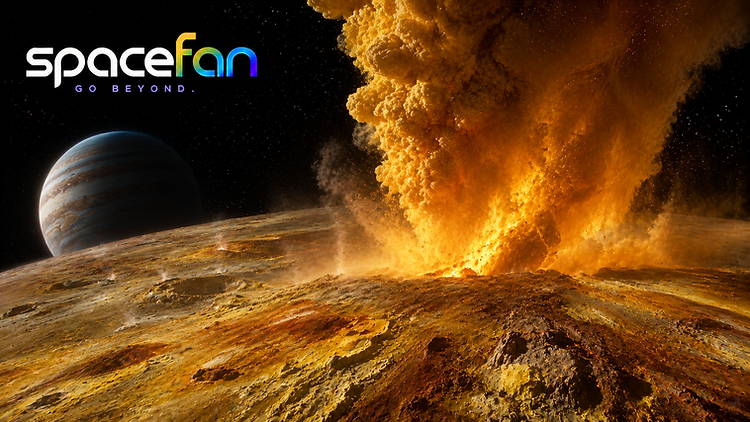
Huge volcanic eruption on the orange surface of Io with Jupiter visible in space behind it.
Image · Space.Fan

The Drop

When astronomers look at the distant universe, they see light traveling through clouds of gas. This gas acts like a fog, creating dark spots in the light patterns that make it hard to measure how the universe is growing. These clouds, which contain hydrogen, can sometimes block our view, much like dust on a camera lens. By studying these spots, scientists hope to learn more about the history of space. To better understand this, researchers used a giant computer simulation called TNG50. This tool acts like a virtual lab for the universe, allowing scientists to recreate galaxies and the gas around them in great detail. They traced individual beams of light through the simulation to see exactly where the gas was coming from and how it changed the view. By splitting the light into two groups—one affected by the gas and one that was clear—the team found a predictable pattern. They discovered that the type of gas blocking the light depends on how close it is to the center of a galaxy. This allowed them to map out exactly where different types of gas clouds live. This new method acts like a filter. By knowing where these gas clouds are usually located, future researchers can create better tools to remove this cosmic fog from their real-world observations, helping us get a much clearer picture of the early universe.
Advertisement

Why It Matters

This research is a big deal because it helps scientists fix errors in their data. Currently, some of these gas clouds are so hard to detect that they get mixed up with other measurements, which can throw off our understanding of how the universe is structured. By creating a more accurate model of how this gas hides in plain sight, researchers can 'clean' their telescope data. This means they can be more precise when calculating the size and shape of the universe, leading to better theories about how everything we see today first began.
Advertisement

The Catch

This study is based on a computer simulation, which is a mathematical model rather than a direct picture of space. While the TNG50 simulation is very advanced, it cannot capture every single tiny detail of the real universe perfectly. Additionally, this work focuses on a specific time in the universe's past, so it might not apply to gas structures in the modern, nearby universe in the exact same way.

Put That in Perspective

Scientists have been trying to map these hidden gas clouds for years. This new work is one of the first steps toward building better, smarter computer tools that can automatically fix blurry telescope data. Future researchers plan to use these findings to build even more advanced models to study the history of space.

Source September 18, 2026
Victor R. Soares da Silva, Daniel López-Cano, L. Raul Abramo, J. Chaves-Montero, Francisco Maion
·10.48550/arXiv.2609.19235

Keep Exploring Space