Advertisement
Space.Fan — Go Beyond
Universe Today · 6 DAYS AGO
UniverseSIMULATION

How Did Huge Black Holes Form So Quickly After the Big Bang?

By Space.Fan Editorial Desk

Scientists are using computer models to understand how monster black holes grew in the early universe, much faster than anyone thought possible.
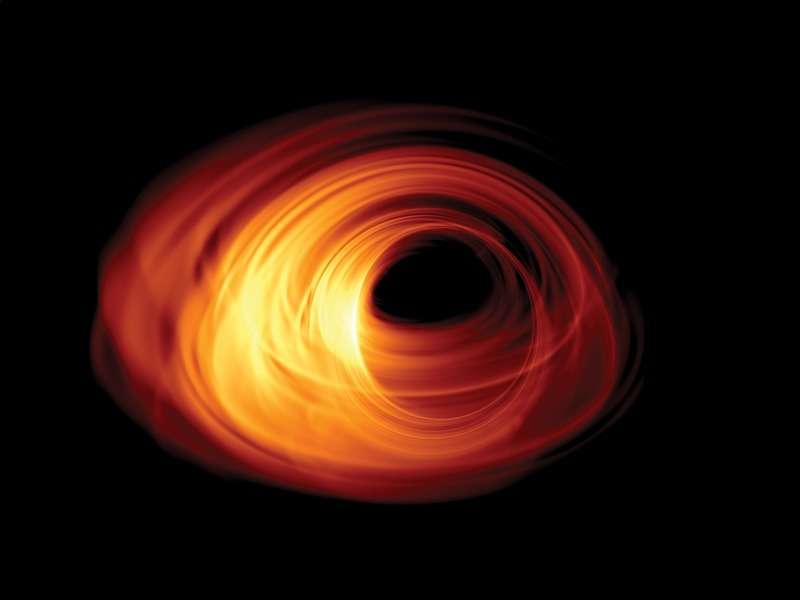
An artistic drawing showing a bright, glowing center of a galaxy with a black hole surrounded by gas and dust.
Image · Universe Today

The Drop

When the James Webb Space Telescope looked into the deep past, it saw something that shocked experts. It found giant s already existing when the universe was less than a billion years old. According to old theories, s grow slowly by eating s or merging with other s. But these new observations suggest they grew too fast for that to be the only way. Astronomers now think a different process called Direct-Collapse might be the answer. Instead of waiting for a to die, a huge, cold cloud of gas in the center of a galaxy might have collapsed all at once to create a heavy seed. To test this, researchers built complex computer simulations. They used high-resolution programs to mimic how dark matter and gas clouds moved in the young universe. By running these experiments, they could see if the environment in early galaxies was crowded enough to push these gas clouds to collapse. The results show that this fast growth was possible as early as 500 million years after the Big Bang, providing a new way to explain how these space giants got so big, so fast.
Advertisement

Why It Matters

This research is important because it solves a big mystery about the early history of the cosmos. By showing that direct collapse is a real possibility, it helps scientists prove that the biggest s didn't need billions of years to reach their massive sizes. This fits better with the surprising images sent back by the James Webb Space Telescope and helps us refine our maps of how galaxies evolved.
Advertisement

The Catch

While these computer simulations are very helpful, they are still just models based on our current understanding of how gravity and gas work. We cannot see back to the very first moment of these s directly, so we are relying on what the computer predicts should have happened. Future observations are needed to confirm that these conditions actually existed in the way the simulation suggests.

Put That in Perspective

Scientists have spent years arguing about how black holes reach such extreme sizes. In the past, the focus was mostly on merging stars. This new research moves the focus to the raw material of the galaxies themselves, setting the stage for more detailed studies of how these seeds eventually turned into the black holes we see today.

Source September 19, 2026
Alessandro Trinca
University of Edinburgh, Institute for Astronomy, Royal Observatory, Como Lake Center for Astrophysics, INAF Osservatorio Astronomico di Roma, INAF Osservatorio di Astrofisica e Scienza dello Spazio di Bologna, Institute of Science and Technology Austria, Institut d’Astrophysique, Sapienza School for Advanced Studies·Monthly Notices of the Royal Astronomical Society

Keep Exploring Space