Advertisement
Space.Fan — Go Beyond
NASA · 23 HR AGO
MissionsMISSION UPDATE

Hubble Maps a Sea of Stars to Prep for a New Space Telescope

By Space.Fan Editorial Desk

NASA’s Hubble Space Telescope is capturing high-detail views of our galaxy to help the upcoming Roman Space Telescope find new worlds.
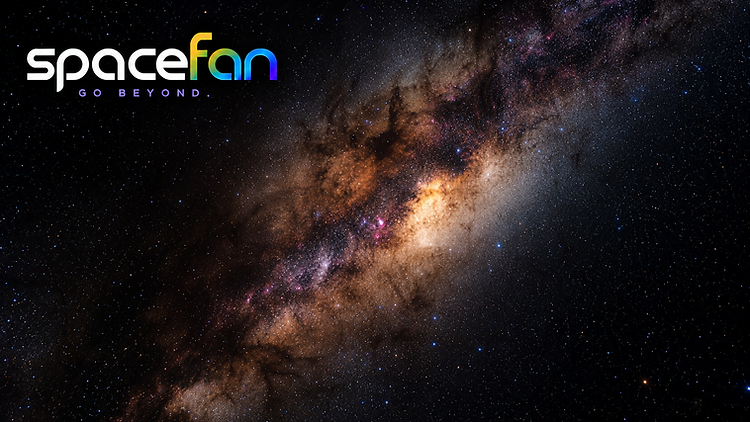
Dense star fields and glowing dust clouds across the center of the Milky Way galaxy.
Image · Space.Fan

The Drop

The Hubble Space Telescope has turned its sensitive lens toward a very crowded part of our galaxy. By taking detailed pictures of these packed regions, astronomers are creating a map that acts like a practice run for the future Nancy Grace Roman Space Telescope. The goal is to see how s look in a place where they are huddled closely together. When the Roman telescope launches, it will need to know exactly how to handle these busy neighborhoods, and Hubble is providing the perfect roadmap to help it succeed. Hubble uses its sharp vision to distinguish individual s even when they are clustered in a tight, glowing group. This survey collects light from thousands of distant s, allowing scientists to build a high-quality guide. By comparing these current pictures with data from other missions, the team ensures that the future technology will be calibrated perfectly to spot faint changes in light.
Advertisement

Why It Matters

This work is a vital step in the hunt for exos, which are s that orbit s outside our solar system. The Roman Space Telescope is designed to scan massive areas of the sky to find these distant worlds, but looking at dense fields can be tricky for any camera. By using Hubble's clear data as a baseline, scientists can teach the Roman telescope how to correctly identify and track s without getting confused by the brightness of nearby s.
Advertisement

The Catch

While Hubble provides excellent images, it can only see a small patch of the sky at one time compared to what the Roman telescope will eventually survey. These results do not guarantee the discovery of specific s yet; they are primarily a way to test and prepare the software and observation techniques for future use.

Put That in Perspective

Hubble has been operating for over three decades, and its ability to act as a scout for next-generation telescopes proves that older missions are still essential. Astronomers will use this data to refine their search plans before the Roman mission begins its official survey.

Source November 25, 2026
NASA

Keep Exploring Space