
The Wingless Plane: NASA's M2-F3 Test Flight
Back in 1970, NASA tested a unique aircraft that flew without wings to help design future spacecraft.
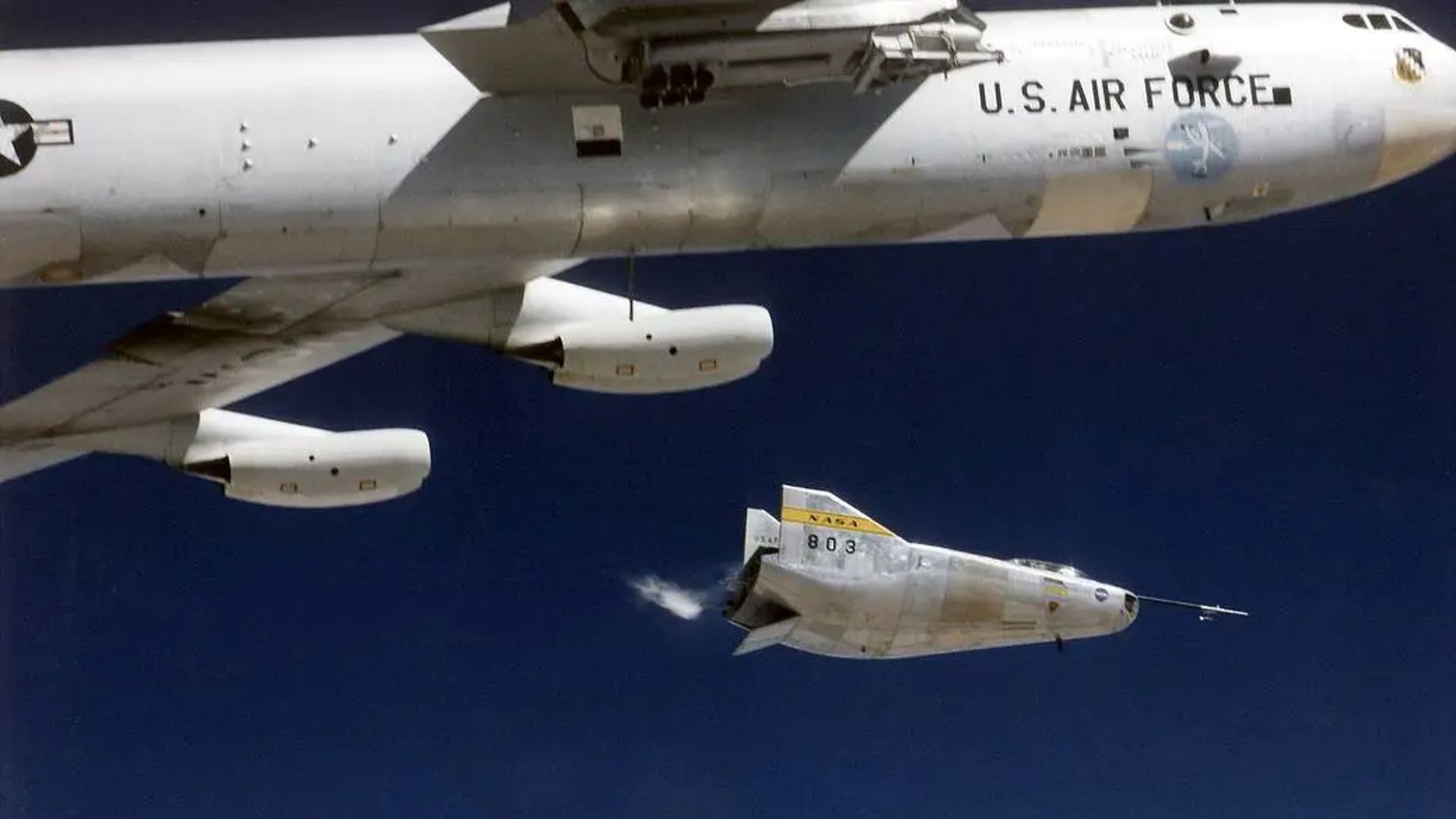
The Drop
Why It Matters
The Catch
Put That in Perspective
The M2-F3 was part of a series of lifting body tests in the 1960s and 1970s. These early experiments paved the way for the Space Shuttle program. It stands as a prime example of how engineers must test bold, strange-looking designs on Earth before they can reliably fly them in the harsh environment of space.
Keep Exploring Space


What NASA Learned From Its Bold Asteroid Sample Return Mission
A new report reveals how engineers overcame unexpected asteroid conditions to bring a piece of Bennu home to Earth.


Hubble Maps a Sea of Stars to Prep for a New Space Telescope
NASA’s Hubble Space Telescope is capturing high-detail views of our galaxy to help the upcoming Roman Space Telescope find new worlds.


Scientists Find the Source of a Mysterious Faint Supernova
Researchers have identified the star system that caused a faint explosion known as a Type Iax supernova.


New cosmic yardsticks help map the distant universe
Astronomers have created a better way to measure deep space using stars that pulse like steady cosmic clocks.