
Space.Fan — Go Beyond
ApJ · 3 DAYS AGO
UniversePEER REVIEWED

James Webb Telescope Finds a Crowded Neighborhood in the Early Universe

By Space.Fan Editorial Desk

Astronomers discovered a busy group of ten galaxies huddled together just 550 million years after the Big Bang.
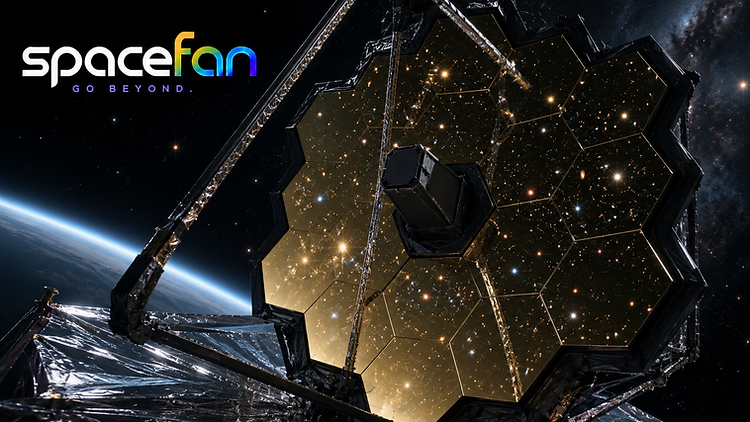
James Webb Space Telescope in space with its gold segmented mirror facing the stars.

The Drop

Scientists using the James Webb Space Telescope have found a surprising cluster of galaxies in the deep, early past of our universe. They spotted a group of ten galaxies hanging out together at a time when the universe was only 550 million years old. This is an incredibly long time ago, making it one of the oldest groups of galaxies ever seen. The researchers found this special spot while looking at a patch of sky known as MACS0416. To find these galaxies, the team used a special survey method called SAPPHIRES. They used the telescope's NIRCam instrument to look for faint light signatures from the galaxies. By using a technique called slitless spectroscopy, they were able to catch the unique colors, or light fingerprints, of these distant objects. This confirmed that these galaxies were all packed into the same general area at the same time. This group of galaxies is much more crowded than scientists expected. It is six to eight times denser than average spots in the early universe. Even more exciting, one of these galaxies holds a small, active . This suggests that s were already ting to grow quickly even when the universe was very young and still filling up with s.
Advertisement

Why It Matters

This discovery matters because it helps us understand how the very first big structures in the universe formed. Models of how the universe grows usually don't predict finding such a dense group of galaxies so soon after the Big Bang. Finding one in a random, small patch of sky is a big surprise. It shows that gravity was likely pulling gas and s together into groups much faster than we thought. This helps explain how the universe built its large-scale structure, where galaxies are not spread out evenly, but instead cluster together in webs and chains.
Advertisement

The Catch

While the finding is robust, it is still based on a small survey area. Scientists only looked at a random, small slice of the sky. Because they found such a big cluster in such a small space, it might just be a lucky observation of a rare, special place. Future surveys will need to look at more areas of the sky to see if these crowded neighborhoods are common or just very unusual.

Put That in Perspective

This finding is a huge jump forward in understanding the early universe. In the past, it was extremely difficult to see details from this long ago. Researchers now plan to use these results to refine their computer simulations, which will help them predict where other similar 'early cities' of galaxies might be hiding.

Source September 7, 2026
ApJ

Keep Exploring Space