Advertisement
Space.Fan — Go Beyond
NASA · 6 DAYS AGO
ImagesNEW OBSERVATION

James Webb Telescope Reveals Hidden Star-Making Jets in NGC 7129

By Space.Fan Editorial Desk

A stunning new image shows how young, hidden stars blast powerful jets into space to clear away their dusty cocoons.
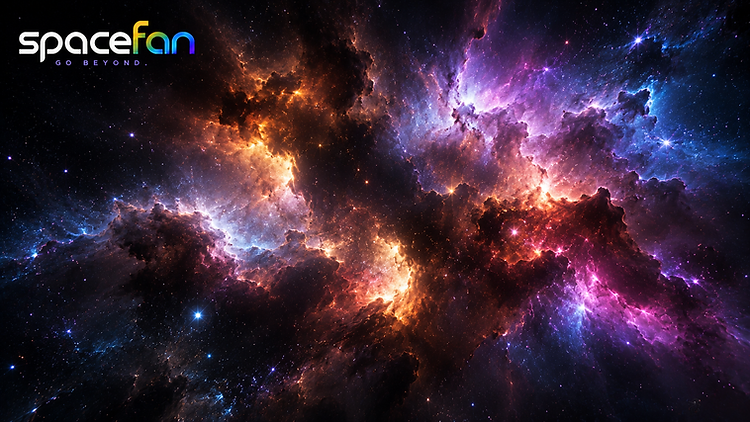
Colorful glowing nebula filled with stars and clouds of blue, purple, orange, and red gas.
Image · Space.Fan

The Drop

Deep within a region called NGC 7129, new s are being born inside clouds of gas and dust. While these clouds usually hide s from our view, the James Webb Space Telescope has used its special infrared cameras to look right through the thick dust. It captured a clear look at these baby s as they begin their lives in the universe. Scientists can now see the detailed structures of these forming systems in a way that was not possible before. The most striking features in the image are the glowing, colorful jets. These jets are streams of gas being shot out by the young s at high speeds. They act like cosmic bulldozers, pushing away the surrounding material and helping the grow. By studying these jets, researchers can watch the violent and messy process of formation in real time. This information helps us understand the complex journey a takes from a clump of dust to a bright, shining object.
Advertisement

Why It Matters

Understanding how s form is key to learning how galaxies build themselves over time. These jets are not just beautiful; they are evidence of the energy released during the birth of a . By observing how these jets interact with the nearby dust, scientists can measure how much material is being moved and how it affects the space around the new . This helps confirm theories about how gravity and pressure work together to create or stop new growth.
Advertisement

The Catch

While these images give us a front-row seat to birth, they represent a very short moment in time. A takes millions of years to grow, so we are only seeing a tiny snapshot of a long process. Additionally, while infrared light helps us see through the dust, some details about the chemical makeup of these jets remain hidden and require more data to fully identify.

Put That in Perspective

NGC 7129 is a famous nursery for stars located about 3,300 light-years away from Earth. Previous telescopes provided blurry hints of this activity, but the sensitivity of the Webb telescope allows us to see the finer, glowing details of these gas jets for the first time.

Source November 16, 2026
NASA

Keep Exploring Space