Space.Fan — Go Beyond
ApJ · 3 DAYS AGO
UniversePEER REVIEWED

Mapping the Invisible Gas Clouds Surrounding Massive Galaxies

By Space.Fan Editorial Desk

Scientists used a powerful telescope to track how cool gas clouds evolve around massive, aging galaxies over billions of years.

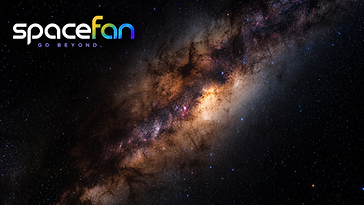
The Milky Way galaxy arching over mountains on Earth.
Image · Space.Fan

The Drop

Galaxies are not just stars and planets; they are surrounded by giant, invisible clouds of gas known as the circumgalactic medium. By using the Dark Energy Spectroscopic Instrument, researchers looked at 800,000 pairs of galaxies and distant light sources. This massive amount of data allowed them to see how these gas clouds change over time. By checking how light from distant objects travels through these gas clouds, scientists can map where the gas is and how it moves. The study looked at data from a time when the universe was much younger, between 4 and 8 billion years ago. They found that these cool gas clouds were much more common around massive galaxies in the past than they are today. This change follows a similar pattern to how quickly galaxies were forming new stars during those same eras. The study also found that the biggest, heaviest galaxies seem to have less of this cool gas near their centers, suggesting that something, perhaps their sheer size or internal energy, pushes it away.
Advertisement

Why It Matters

This research helps us understand the life cycle of galaxies. By studying these gas clouds, scientists can figure out how galaxies get the fuel they need to grow. Knowing why some galaxies have plenty of gas while others lose it helps explain why some galaxies keep building new stars while others stop.
Advertisement

The Catch

While this study covers a huge number of galaxies, it relies on light passing through the gas, which only provides a thin slice of the overall picture. Researchers still have to use computer models to infer the full shape and behavior of these clouds. It is also possible that different types of galaxies behave in ways this specific group does not show.

Put That in Perspective

This work adds a major piece to the puzzle of galaxy evolution. In the past, scientists could only look at a few galaxies at a time. With this new, massive data set, researchers can finally see the big picture of how galaxies have matured over billions of years.

Source September 22, 2026
Yu-Ling Chang, Ting-Wen Lan, J. Xavier Prochaska, Malgorzata Siudek, J. Aguilar, S. Ahlen, Abhijeet Anand, D. Bianchi, D. Brooks, F. J. Castander
National Taiwan University, University of California Santa Cruz, Kavli Institute for the Physics and Mathematics of the Universe, Institute of Space Sciences, Lawrence Berkeley National Laboratory, Boston University, Università degli Studi di Milano, University College London·The Astrophysical Journal·10.3847/1538-4357/ae96b2

Keep Exploring Space