Advertisement
Space.Fan — Go Beyond
arXiv · 1 HR AGO
MissionsMISSION UPDATE

NASA Plans New Mission to Bring Back Rocks From the Moon's Largest Crater

By Space.Fan Editorial Desk

A new mission report details how we could finally bring home samples from the Moon's hidden farside to unlock secrets of its ancient past.
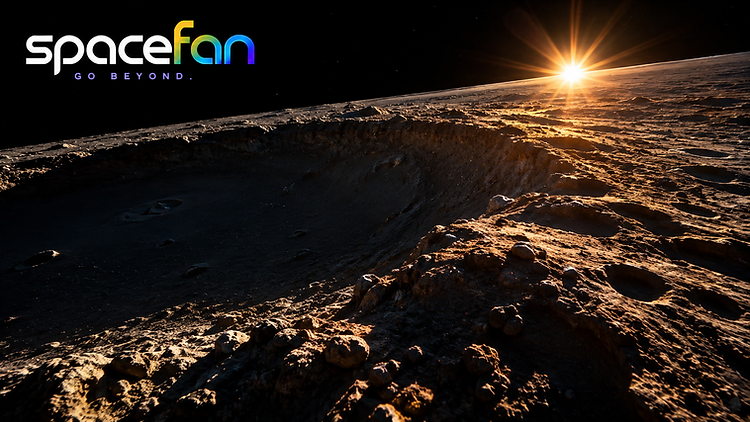
A lunar crater on the surface of the Moon.
Image · Space.Fan

The Drop

For over twenty years, space experts have agreed that the best place to visit on the is a giant hole called the South Pole-Aitken basin. This basin is one of the oldest and largest craters in our entire solar system. Because it is located on the far side of the , it has remained largely a mystery to us. NASA recently put together a team of experts to figure out how to send a spacecraft there to scoop up rocks and bring them back to Earth. The team just released a massive plan called SPARX that explains how to do this. Scientists want to use new space technology and help from private companies to make this trip safer and cheaper than ever before. By bringing these rocks home, researchers hope to answer questions about the 's history that have stumped us for sixty years.
Advertisement

Why It Matters

This mission is a big deal because the South Pole-Aitken basin is like a time capsule. Because the crater is so old and deep, the rocks there could tell us about the earliest times of the and how it formed. By studying these samples on Earth with our best microscopes, we can learn details that robots on the surface simply cannot find. It would act as a bridge between the robotic missions of the past and a future where humans might live and work on the .
Advertisement

The Catch

While the plan for the mission is ready, it is important to remember that this is currently just a roadmap. The mission has not been built or officially scheduled for launch yet. It still needs funding and final approval from space agencies. Even if everything goes perfectly, the mission faces technical challenges, such as the difficulty of landing on the far side of the and sending signals back to Earth.

Put That in Perspective

Scientists have been talking about visiting this specific crater since the early 2000s, but technology is finally catching up to their goals. This mission would be a major shift in how we explore space by mixing the newest robotic tools with the commercial space industry's help. Next, researchers will likely look at how to fit these goals into future NASA budgets.

Source September 25, 2026
Lauren M. Jozwiak, James T. Keane, Robert Citron, Natalie Curran, Steve Elardo, Caleb Fassett, Abigail Fraeman, Saira Hamid, Lena Heffern, Peter James, Daniel Moriarty, Kevin Righter, Jennifer Whitten, Hunter Vannier, Zoe Wilbur, Tomokatsu Morota, Hiroshi Nagaoka, Caroline-Emmanuelle Morisset, Patrick Hill, James Carpenter, Francesca MacDonald
NASA·arXiv·10.48550/arXiv.2609.28532

Keep Exploring Space