Advertisement
Space.Fan — Go Beyond
AJ · 9 HR AGO
Asteroids & CometsPEER REVIEWED

Mapping the Path for the Emirates Asteroid Mission

By Space.Fan Editorial Desk

Scientists are fine-tuning the exact flight paths for two asteroid targets to ensure the Emirates mission succeeds.
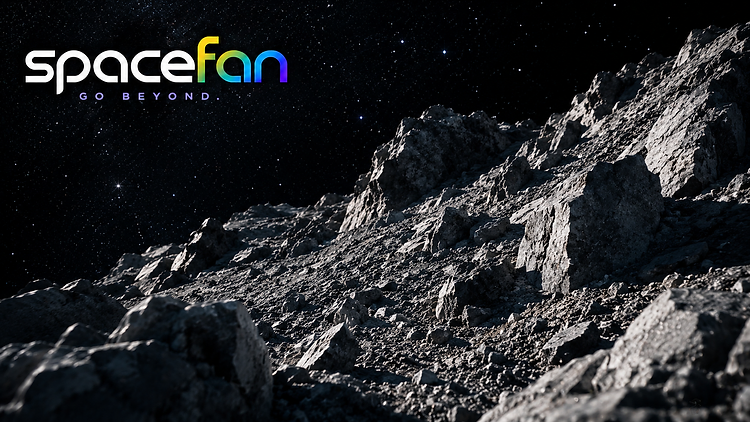
Rugged rocky asteroid surface covered with boulders beneath a star-filled sky.
Image · Space.Fan

The Drop

The United Arab Emirates is preparing for a bold mission to study s in the main belt. To get there, engineers need to know exactly where these space rocks will be when the spacecraft arrives in 2030 and 2031. Researchers recently studied two specific targets, known as Westerwald and Rockox, to map their paths with extreme precision. By looking at 52 years of data from ground-based telescopes and combining it with sharp measurements from the Gaia space observatory, the team successfully calculated the s' locations down to just a few kilometers. This level of accuracy is essential for a spacecraft planning to fly close to these objects. The scientists also looked for a subtle force called the Yarkovsky effect, which happens when sunlight pushes an slightly off course as it spins and heats up. However, their data did not show a clear sign of this force acting on these specific targets, meaning they were unable to detect it this time.
Advertisement

Why It Matters

Knowing the precise orbit of an is crucial for any mission that wants to fly close to one. If the math is even slightly off, a spacecraft might miss its target or face dangerous conditions. By narrowing down the uncertainty to a few kilometers, this work builds the map that the Emirates mission will use for its encounter. Beyond navigation, understanding these orbits helps us keep better track of objects in our solar system that might pass near Earth.
Advertisement

The Catch

While the researchers got very precise results, they could not confirm if the s are being pushed by the Yarkovsky effect. The data they have for these two rocks is not quite sensitive enough to see that small push. Scientists expect that better data from future Gaia updates will eventually help them measure this effect more clearly.

Put That in Perspective

Tracking asteroids over many decades is like connecting dots across a long timeline. This study used over half a century of observations to improve current models. Next, researchers look forward to using better data from the upcoming Gaia DR4 mission to get an even clearer picture of how these space rocks move through our system.

Source September 27, 2026
Zimeng Li, Runsong Lu, Wanling Yang, Shangbiao Sun, Bo Wang, Wutong Gao, Jianguo Yan, Jean-Pierre Barriot
Wuhan University, University of French Polynesia·The Astronomical Journal·10.3847/1538-3881/ae9ec0

Keep Exploring Space