Advertisement
Space.Fan — Go Beyond
PSJ · 2 DAYS AGO
Asteroids & CometsPEER REVIEWED

Search for Hidden Moons Around Asteroid Didymos Comes Up Empty

By Space.Fan Editorial Desk

Scientists used NASA and Italian space cameras to hunt for tiny space rocks near the asteroid Dimorphos, finding nothing hiding in the shadows.
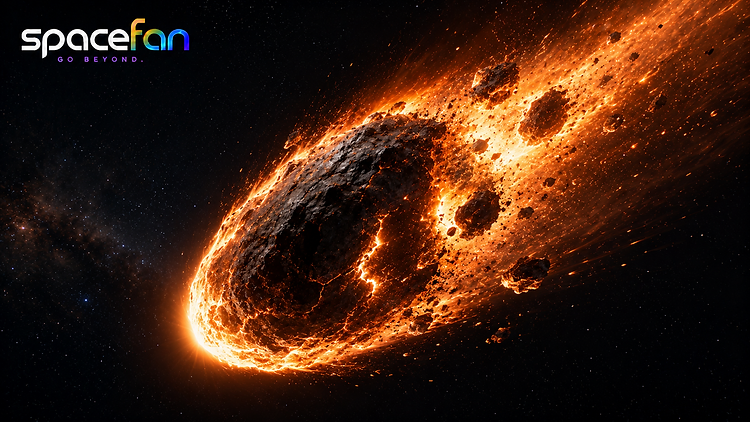
Large fractured asteroid engulfed in flames and glowing debris as it travels through space.
Image · Space.Fan

The Drop

In 2022, a NASA spacecraft called DART crashed into an named Dimorphos to see if we could change its path. At the same time, a small Italian camera called LICIACube watched the whole thing happen from nearby. While the main goal was to test our impact skills, scientists also used this opportunity to search for any other tiny rocks or s hiding around the main , Didymos. They wanted to make sure there were no extra objects that could get in the way of future missions. Using cameras from both spacecraft, the team looked closely at the area around the . They searched for any hidden space rocks that might be orbiting there. After checking the data, the researchers found absolutely nothing larger than about 50 meters wide. They also checked for even smaller rocks closer to the . They found no objects as small as 2 meters wide hiding within two kilometers of the . This tells us the area is mostly empty of other rocky companions.
Advertisement

Why It Matters

This search is important because it tells us exactly what the environment is like around this system. Before sending more missions to visit space rocks, researchers need to know if there are hidden dangers, like small debris that could damage a spacecraft. By confirming this area is empty, scientists can better plan for the European Space Agency's Hera mission, which is headed there soon.
Advertisement

The Catch

While the team found nothing, they can only see objects that are large enough for their cameras to spot. There is always a tiny chance that even smaller pieces of dust or very tiny pebbles exist, but they are too small to be picked up by the cameras used during the DART mission. The scientists focused only on objects they could actually detect in their pictures.

Put That in Perspective

This study sets a clear baseline for what we know about the Didymos system. It helps compare what we saw during the impact to what the European Space Agency will see when its Hera mission arrives at the asteroid in late 2026 to study the crash site in detail.

Source September 27, 2026
NASA, Italian Space Agency (ASI), European Space Agency (ESA)·PSJ

Keep Exploring Space