Advertisement
Space.Fan — Go Beyond
ApJS · 17 MIN AGO
UniversePEER REVIEWED

New AI Tool Speeds Up the Search for Ripples in Space-Time

By Space.Fan Editorial Desk

Scientists have created a faster way to analyze gravitational waves using smart computer programs.
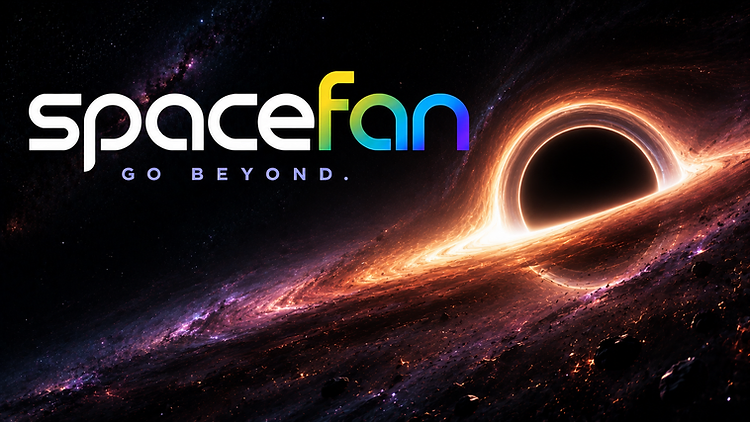
A black hole with a glowing accretion disk in deep space.
Image · Space.Fan

The Drop

When massive objects like s collide, they send out ripples in space called gravitational waves. Scientists use special sensors to listen for these signals, but figuring out what caused the ripples is a very hard math problem. Usually, it takes supercomputers hours or even days to solve this puzzle for just one single event. A team of researchers has now built a new tool called BilbyFlow to change that. BilbyFlow uses a type of smart computer program called a neural network to look at the data. Instead of trying every possibility one by one, the AI learns to estimate the answer very quickly. It is designed to work within a popular set of scientific tools called Bilby that researchers already use. To test the new program, the team used data from 38 major space events that were already recorded in the past. For most of these, BilbyFlow could provide accurate results in as little as three minutes. This is a huge improvement over the old way of doing things.
Advertisement

Why It Matters

In the near future, our space sensors are going to get much better and detect many more collisions between objects like s. If scientists had to keep using the old, slow methods, they would fall behind and might miss important information. By speeding up the analysis, BilbyFlow helps astronomers keep up with the flood of new data expected from next-generation observatories.
Advertisement

The Catch

While BilbyFlow is much faster, it does not work perfectly for every single event yet. For some complex data, the program still takes a long time to finish. The team plans to keep working on the code to make it more reliable so it can consistently handle any signal that comes in from space.

Put That in Perspective

As our technology gets better, the number of discoveries we make in space will increase rapidly. Tools like this represent a shift in how we handle big data, moving from traditional calculations to using machine learning to keep pace with a busier universe.

Source November 23, 2026
Liam Pinchbeck, Eric Thrane, Csaba Balazs, Paul D. Lasky
Monash University, OzGrav·The Astrophysical Journal Supplement Series·10.3847/1538-4365/aeb372

Keep Exploring Space