Advertisement
Space.Fan — Go Beyond
ApJS · 2 HR AGO
UniversePEER REVIEWED

New Tool 'GalSyn' Helps Computers Build Realistic Digital Galaxies

By Space.Fan Editorial Desk

Scientists created a clever new way to turn galaxy computer models into digital pictures that look like real telescope data.
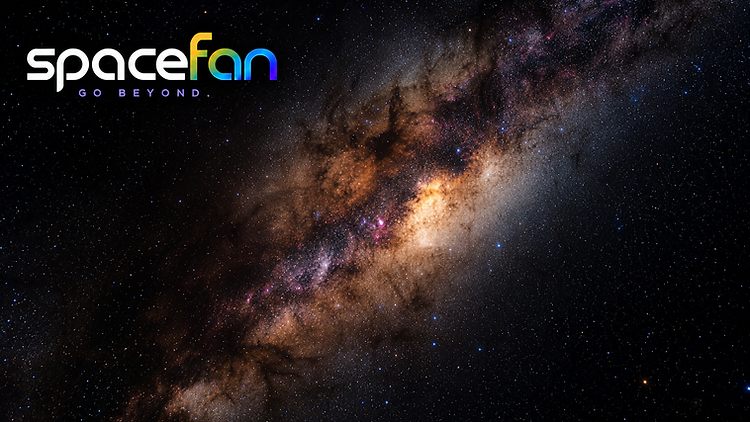
Dense star fields and glowing dust clouds across the center of the Milky Way galaxy.
Image · Space.Fan

The Drop

Astronomers use massive computer simulations to study how galaxies grow over billions of years. However, these simulations often look very different from the fuzzy, glowing images we get from space telescopes. To bridge this gap, a team of researchers built a new software package called GalSyn. It acts like a digital camera for computer simulations, turning raw data into images that mimic how actual telescopes see the sky. GalSyn works by looking at the individual parts of a simulated galaxy and calculating how they would appear through a lens. It considers things like dust, which blocks light, and the different ways s shine. It can even add the 'noise' or blurriness that real cameras encounter in space, making the simulated galaxies look much more lifelike. Alongside this software, the team released a large set of mock images based on the IllustrisTNG simulation. These images show what galaxies might look like when viewed by famous telescopes like Hubble, James Webb, and the upcoming Roman Space Telescope. By looking at these 47 different filters, researchers can better compare their computer models to the real snapshots we capture in deep space.
Advertisement

Why It Matters

This tool is a big deal because it helps scientists test their theories about how the universe works. By comparing real telescope observations with these new, highly detailed 'mock' images, astronomers can see if their computer simulations are accurate. If the simulated galaxy matches the real one, the team knows they are on the right track in explaining how s and galaxies formed long ago.
Advertisement

The Catch

While GalSyn is a powerful tool, it is only as good as the simulation data put into it. If the original computer simulation has a mistake or misses a specific physical process, the fake images will carry those same problems. It is a guide for understanding the universe, but it does not replace the need for actual telescope data.

Put That in Perspective

In the past, making these kinds of detailed images took a long time and a lot of computing power. GalSyn is much faster, allowing researchers to study large groups of galaxies rather than just a few at a time. Scientists will likely use this tool next to better prepare for the massive amount of data expected from future space missions.

Source September 27, 2026
Abdurro’uf, Henry C. Ferguson, Samir Salim, Kartheik G. Iyer, Larry D. Bradley, Dan Coe, Novan Saputra Haryana, Sultan Hassan, Intae Jung, Gourav Khullar, Takahiro Morishita, Lamiya Mowla
Indiana University, Space Telescope Science Institute, Flatiron Institute, Tohoku University, Chungbuk National University, University of Washington, Wellesley College·The Astrophysical Journal Supplement Series·10.3847/1538-4365/ae9c39

Keep Exploring Space