Space.Fan — Go Beyond
ApJ · 6 HR AGO
UniverseMODEL

Scientists Build a New 'Recipe' for Understanding Neutron Stars

By Space.Fan Editorial Desk

Researchers have created a new mathematical model to help us better understand the mysterious, ultra-dense interiors of dead stars.
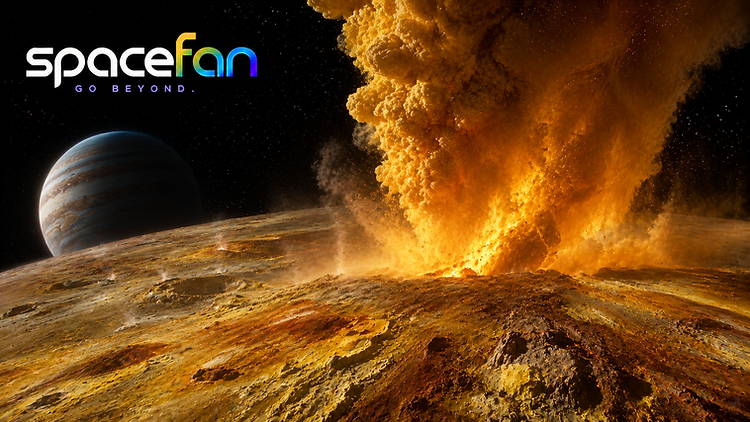
Huge volcanic eruption on the orange surface of Io with Jupiter visible in space behind it.
Image · Space.Fan

The Drop

s are some of the densest objects in the universe. They are the tiny, heavy leftovers of giant s that have exploded. Because these objects are so dense, it is very hard for scientists to know exactly what is going on deep inside them. To solve this, researchers built a new mathematical 'recipe' called an equation of state. This recipe helps scientists predict how a ’s matter behaves under extreme pressure. To build this tool, the team looked at data from previous observations. They used information from large, spinning s called pulsars, as well as data from the NICER telescope, which measures the size of these s. They also used information from gravitational waves, which are ripples in space detected when two s crash into each other. By combining all these pieces of information, the researchers created a model that fits all current observations. Their new model suggests that a typical is about 11.3 kilometers wide. This helps scientists create a reliable baseline to compare with future space discoveries.
Advertisement

Why It Matters

This new model acts like a cheat sheet for researchers studying dense matter. By having a standardized way to describe how material reacts to pressure, scientists can more easily check if new observations of s match what we expect to see. It helps rule out models that do not align with our latest data, making it easier to study the physics of the universe's most compact objects.
Advertisement

The Catch

This model is a mathematical tool rather than a direct photograph or physical sample. It relies on combining different sets of data, such as gravitational wave signals and telescope measurements. Because there is still a lot of mystery surrounding the exact nature of the material inside a , this model is only as good as the data it was built on. Future discoveries might reveal new details that require updating this recipe.

Put That in Perspective

In the past, many models failed to match all the information we have gathered from space. By successfully combining multiple types of observations, this new approach provides a stronger starting point for future research. Scientists will likely use this tool to test against new neutron star observations as they come in from advanced space telescopes.

Source October 2, 2026
Tian-Shun Chen, Xiao-Ding Zhou, Kilar Zhang
Tsung-Dao Lee Institute, Shanghai Jiao-Tong University, Shanghai University·The Astrophysical Journal·10.3847/1538-4357/aea217

Keep Exploring Space