Advertisement
Space.Fan — Go Beyond
arXiv · 1 HR AGO
UniverseSIMULATION

Scientists Discover How Hot and Cold Gas Mix in Space

By Space.Fan Editorial Desk

New simulations show that a mysterious process called charge exchange helps reveal the hidden edges where hot and cold gases meet in space.
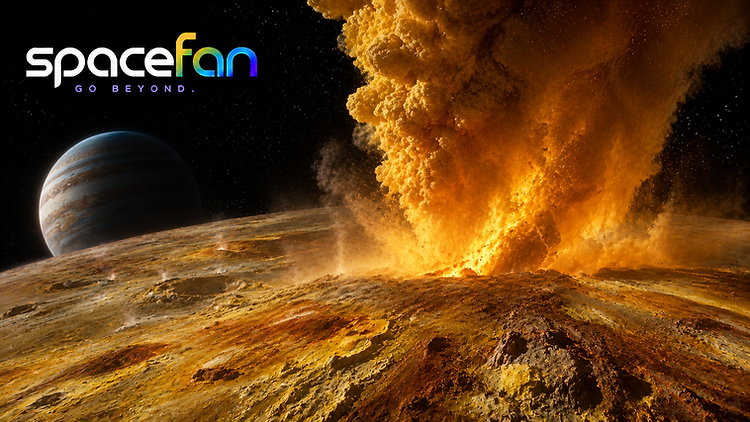
Huge volcanic eruption on the orange surface of Io with Jupiter visible in space behind it.
Image · Space.Fan

The Drop

Space is filled with gas that is both very hot and very cold. For a long time, it has been hard for astronomers to see where these two different types of gas meet. This meeting place is called an interface. Because these spots are so thin and hard to find, scientists have struggled to understand how they work. To solve this, researchers used computer models to simulate how these gases mix together. They focused on a process called charge exchange. This happens when a high-energy particle in hot gas steals an electron from a neutral atom in cooler gas. When this happens, it lets off a tiny pulse of X-ray light. By watching these pulses, the team could map out the hidden edges of these gas clouds. The computer models showed that these interfaces are not smooth. Instead, they are very wavy and stretched out, which helps the gases mix more easily. This process works like a cosmic light that turns on only at the boundary where the two gases touch. The study shows that these glowing edges are everywhere, from the center of our own galaxy to the vast clouds of gas surrounding other galaxies. By tracking these specific X-ray pulses, scientists can now get a much better look at how galaxies grow and change over time.
Advertisement

Why It Matters

Understanding how gas moves around is key to knowing how galaxies are built. This discovery helps scientists see the 'missing' parts of the gas that surrounds galaxies. It proves that the mixing of hot and cold gases is a major part of how galaxies interact with the space around them. Before this, it was difficult to tell exactly how much gas was interacting in these zones. Now, by measuring the light from these electron-stealing events, researchers have a new way to measure the structure of space on a very large scale.
Advertisement

The Catch

This discovery comes from a computer model, which is a math-based simulation rather than a direct photo. While the physics behind it is based on known science, the model relies on certain assumptions about how gas behaves in deep space. Real-world observations with future telescopes will be needed to confirm if these simulations perfectly match what is happening out there.

Put That in Perspective

Astronomers have long tried to solve the puzzle of how galaxies get their fuel. By using these new models, scientists can now look for specific signs of this gas mixing in current and future telescope data. This provides a roadmap for what to look for when we scan the skies for the invisible gas that shapes our universe.

Source November 23, 2026
Yizhan Zhang, Suoqing Ji, Guiyun Liang, Shuinai Zhang, Zhijie Qu
ApJ·10.48550/arXiv.2611.26684

Keep Exploring Space