Advertisement
Space.Fan — Go Beyond
ApJL · 59 MIN AGO
UniversePEER REVIEWED

Solving the Mystery of Cosmic X-Ray Bursts

By Space.Fan Editorial Desk

Scientists discovered that a single type of super-powerful star can explain many different patterns seen in space explosions.
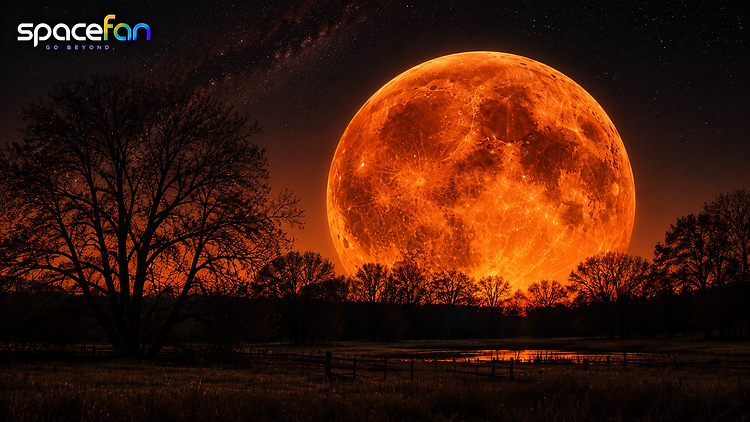
Giant glowing orange harvest moon rising behind silhouetted trees and a rural field under a dark starry sky.
Image · Space.Fan

The Drop

When s die in the far reaches of space, they sometimes create massive explosions called Gamma-Ray Bursts. These events release huge amounts of energy, and space telescopes often see a 'plateau' or a flat, steady brightness level in the X-ray light that follows the explosion. Scientists have long wondered why these plateaus look different—some rise, some stay flat, and some slowly fade away. To find out, a team of researchers looked at 185 of these explosions. They wanted to see if the different shapes of these light patterns were caused by different types of objects or just one type behaving in different ways. They tested the idea that a special kind of dead called a is responsible for the energy. A is a small, incredibly dense with a magnetic field so strong it is nearly impossible to imagine. Using complex computer math to study the group of 185 bursts at once, the team found that the theory works perfectly. Their results show that one kind of can create all the different plateau shapes we see. Basically, the team proved that these diverse patterns are not caused by many different types of space objects. Instead, the variety comes from the natural range of energy output within the population itself.
Advertisement

Why It Matters

This study is a big deal because it simplifies our map of the violent universe. Instead of guessing that there might be several strange, unknown objects creating these different light patterns, we now have strong evidence that a single, known object—the —is likely the culprit for all of them. By confirming this link, researchers can now use these X-ray patterns to study s from billions of s away. It helps us better understand how these extreme s act during the final, most energetic moments of their lives.
Advertisement

The Catch

While the theory fits the data well, this study is a statistical model. This means it proves that s are a very good explanation for what we see, but it does not mean we have caught one in the act with a telescope. There is still a chance that other, undiscovered types of s or processes could produce similar signals.

Put That in Perspective

Scientists have been debating the cause of these light plateaus for years. By moving from looking at just one burst at a time to studying a large group of 185 events, researchers were able to spot patterns that were invisible before. Future studies will likely focus on finding even more bursts to see if the model holds up as our sample size grows.

Source September 30, 2026
ApJL

Keep Exploring Space