Advertisement
Space.Fan — Go Beyond
ApJ · 2 HR AGO
UniversePEER REVIEWED

Why Some Stars Stop Pulsating As They Grow Older

By Space.Fan Editorial Desk

Astronomers discovered that star pulsations fade with age, revealing how rotation helps keep some stars blinking.
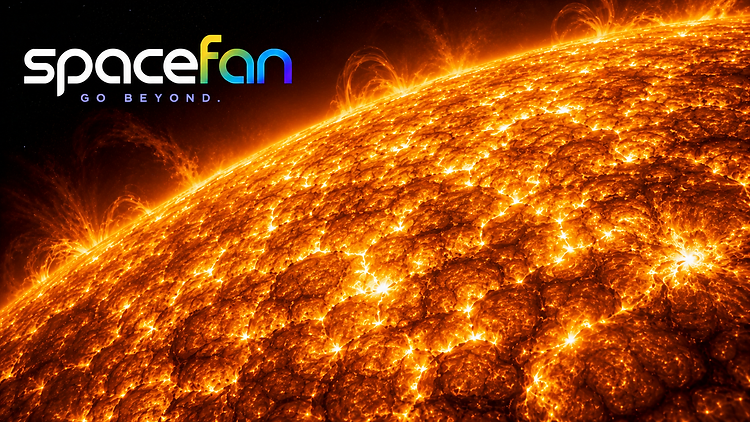
Close-up of the fiery Sun showing bright active regions and looping plasma above its surface.
Image · Space.Fan

The Drop

s called Delta Scuti s act like giant, rhythmic heartbeats in space. They grow and shrink in size, which makes their brightness rise and fall. Scientists have noticed for a long time that many s that should be pulsing seem quiet instead. Researchers recently used data from the TESS space telescope to watch groups of s called open clusters to see how this pulsing changes over time. By looking at clusters of different ages, they were able to compare young s with older ones. They found that in younger groups of s, almost 90 percent were actively pulsing. However, in older groups, that number dropped significantly to about 60 percent. This shows that as these s get older, they are much less likely to pulse. The study also revealed that the s that keep pulsing into old age tend to be the ones spinning the fastest. It seems that rapid rotation acts like a fuel that keeps the ’s rhythm going longer than it would otherwise.
Advertisement

Why It Matters

Understanding why s stop pulsing is a big step in learning how s age. By seeing that rotation plays a key role, astronomers can better predict the life cycle of s like our Sun or others in our galaxy. This discovery helps researchers map out the 'instability strip,' which is the part of the sky where s are likely to pulse, and explains why some neighbors choose to stay quiet.
Advertisement

The Catch

While the data is strong, it only looks at a specific set of clusters within 500 s of Earth. Because these clusters are all relatively nearby, it is not yet clear if the same patterns hold true for s in much more distant or different environments across the galaxy.

Put That in Perspective

Scientists have tracked star vibrations for many years, but looking at these clusters as a group provides a much clearer timeline. Future research will likely focus on how chemical makeup and temperature work together with rotation to influence these star heartbeats.

Source September 30, 2026
Ian Berry, Daniel Huber, Yaguang Li, Daniel Hey, Timothy R. Bedding, Simon J. Murphy
University of Hawai‘i, University of Sydney, University of Southern Queensland·The Astrophysical Journal·10.3847/1538-4357/ae9764

Keep Exploring Space