Advertisement
Space.Fan — Go Beyond
arXiv · 9 HR AGO
Solar SystemSIMULATION

Solving the Mystery of Mercury's Giant Core

By Space.Fan Editorial Desk

Scientists have found a new reason why Mercury has such a huge metallic heart, helping explain a long-standing mystery about the planet.
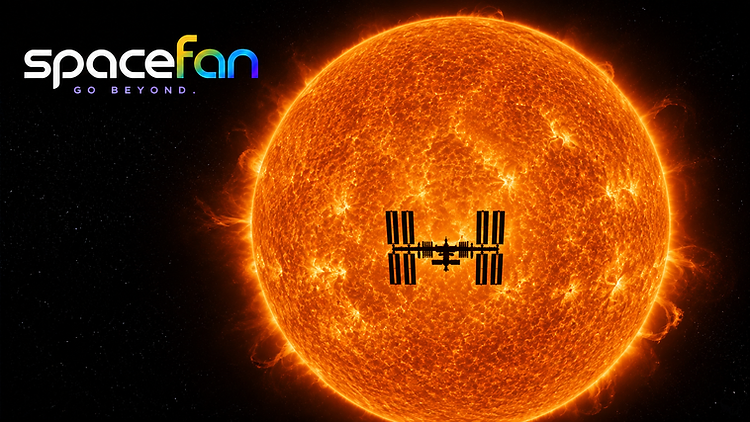
Silhouette of the International Space Station crossing in front of the bright orange Sun.
Image · Space.Fan

The Drop

Mercury is a strange . It is mostly made of a giant metal core, with only a very thin layer of rock on the outside. Many scientists think that a long time ago, a massive object slammed into Mercury. This crash likely stripped away most of the 's outer rocky layer. But there was a problem with this theory: if a giant collision blew off so much rock, why didn't that broken material just fall back down onto the later? Scientists used computer models, known as N-body simulations, to see what would happen to the space rocks left behind after such a hit. They tracked how this debris would break apart over time, ranging from large chunks to tiny dust grains. The simulation showed that the debris is very good at getting rid of itself. Whether it stays as big rocks or turns into tiny nanometer-sized dust, the material is either pushed away by sunlight or destroyed by collisions. Because this debris disappears rather than falling back onto Mercury, it clears the way for the giant impact theory to be true.
Advertisement

Why It Matters

This finding is important because it solves a major missing piece in the story of how our solar system formed. It confirms that a violent history is a very realistic explanation for why Mercury looks the way it does today. By showing that the mess from a giant impact would not simply re-settle on the , researchers have made it much easier to trust that this kind of cosmic crash actually happened.
Advertisement

The Catch

This study relies on computer simulations to predict events that happened billions of years ago. While these models are powerful, they are simplified versions of reality. They cannot perfectly account for every single piece of debris or every gravitational pull in the early solar system, so scientists are looking at probabilities rather than direct proof.

Put That in Perspective

Scientists plan to use these findings to look at other rocky planets and moons. They want to see if similar 'dust-clearing' processes occurred elsewhere in space, which could change how we think about the evolution of other worlds.

Source November 26, 2026
Tuhin Ghosh, Mark Wyatt, Alan P. Jackson, Oliver Shorttle, Maximilian Sommer
MNRAS·10.48550/arXiv.2611.33297

Keep Exploring Space