Advertisement
Space.Fan — Go Beyond
ApJL · 2 DAYS AGO
Solar SystemSIMULATION

The Sun's Final Act May Destroy Our Solar System Faster Than Expected

By Space.Fan Editorial Desk

New research suggests the Sun will not just fade away, but likely cause the outer planets to crash into each other as it dies.
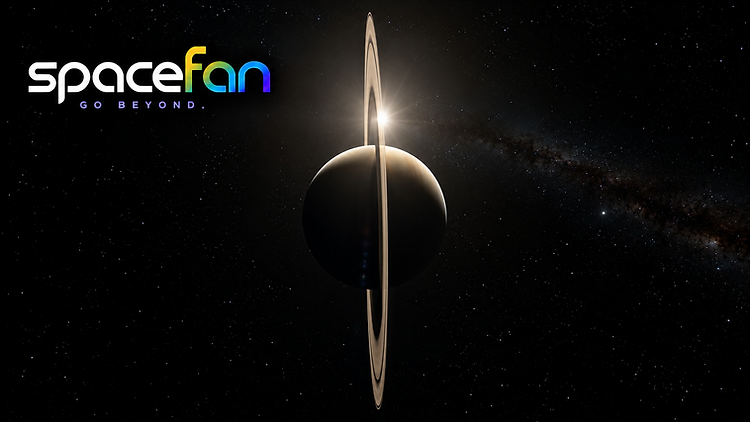
Saturn backlit by the Sun showing its ring system.
Image · Space.Fan

The Drop

For a long time, scientists believed that even after the Sun ran out of fuel, our outer solar system—home to giant s like Jupiter and Saturn—would remain stable for billions of years. Experts previously thought the Sun would lose its outer layers in a smooth, gentle way, like a slow leak in a balloon. However, new evidence from how white dwarf s move shows that s actually lose their mass in messy, uneven bursts. When a releases these giant clumps of material, it acts like a series of kicks to the s orbiting around it. By using advanced computer simulations, researchers tested what would happen to our giant s if the Sun released its material in these rough, uneven bursts during its final stages. The results were surprising. Instead of staying in their orderly lanes, the s began to drift and collide with one another. This chaos can begin while the Sun is still turning into a giant red . In many of the scenarios, most of the outer solar system was destroyed shortly after the Sun finished its life and became a white dwarf .
Advertisement

Why It Matters

This discovery changes our entire timeline for the future of our solar system. Previously, scientists estimated the solar system could survive for an incredibly long time, nearly a quintillion years. This new work shows that the process is much more violent and happens much faster, potentially in just a few billion years. It forces us to rethink how s and their s interact when a reaches the end of its life.
Advertisement

The Catch

This result comes from computer models, which are our best way to look into the far future but are not a guarantee. The accuracy of these findings depends on exactly how 'bumpy' or uneven the Sun's mass loss will be. If the Sun loses its mass in a smoother way than this model assumes, the s might remain stable for much longer than the study suggests.

Put That in Perspective

Scientists plan to compare these computer results with observations of other dying stars in the galaxy. By watching how other planetary systems react to their own aging stars, they hope to confirm if these violent kicks are a common feature of stellar death across the universe.

Source September 22, 2026
Konstantin Batygin, Jim Fuller, and Fred C. Adams
California Institute of Technology and University of Michigan·The Astrophysical Journal Letters·10.3847/2041-8213/aea290

Keep Exploring Space