Advertisement
Space.Fan — Go Beyond
ApJ · 4 HR AGO
UniverseNEW OBSERVATION

Twenty-Five Years of Watching Our Galaxy’s Giant Black Hole Flare

By Space.Fan Editorial Desk

Scientists have finished a massive 25-year study of the supermassive black hole at the heart of the Milky Way.
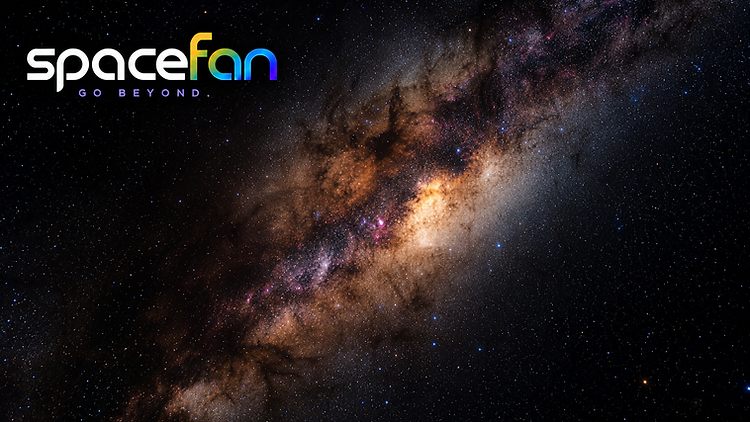
Dense star fields and glowing dust clouds across the center of the Milky Way galaxy.
Image · Space.Fan

The Drop

Our galaxy, the Milky Way, has a giant at its center called Sagittarius A*. While s are invisible because they swallow light, they can create bright flashes of energy. For 25 years, the Chandra X-ray Observatory has watched this very closely to see how it behaves. Researchers just finished looking at every piece of data collected by the telescope over those two and a half decades. They tracked 100 different X-ray flares, which are sudden bursts of light caused by energy being released near the . This is the biggest and most complete collection of these events ever put together. By comparing these 100 flares, the team found that some follow predictable patterns. They noticed that when a flare gets brighter, its light also changes its color or energy level. This suggests that the way particles behave near the changes depending on how much energy is being released. This study adds 18 flares to the history books that had never been documented before. One of these newly found events was the second-brightest flare the telescope has ever captured from our galaxy's center. Having such a long record helps us see the "personality" of our over a long stretch of time.
Advertisement

Why It Matters

This study is important because it confirms that the flares from our are not random chaos. By finding a clear link between how bright a flare is and how its energy is spread out, scientists can better understand the rules of gravity and physics at the center of our galaxy. It gives experts a reliable map of what normal behavior looks like for Sagittarius A*. When they see something unusual in the future, they will know exactly how it compares to the dozens of events they have already studied, helping them spot new cosmic mysteries more easily.
Advertisement

The Catch

While this is the best record we have, there are still limits to what it tells us. The data only shows us what happened in the past, and it does not tell us exactly why the flares up at specific times. The physical cause of the particle changes remains a mystery, and scientists are still building computer models to explain the exact mechanics at play.

Put That in Perspective

Scientists have been keeping a close eye on this part of the sky since 1999. This 25-year catalog is now a foundation for all future studies, as researchers look for more clues using both the Chandra X-ray Observatory and newer telescopes in the years to come.

Source September 30, 2026
ApJ

Keep Exploring Space