Advertisement
Space.Fan — Go Beyond
AJ · 4 DAYS AGO
MissionsMODEL

Venus Will Help Us Decode Earth-Like Planets

By Space.Fan Editorial Desk

A future NASA mission to Venus will act as a key, helping scientists read the secrets of rocky worlds far beyond our own solar system.
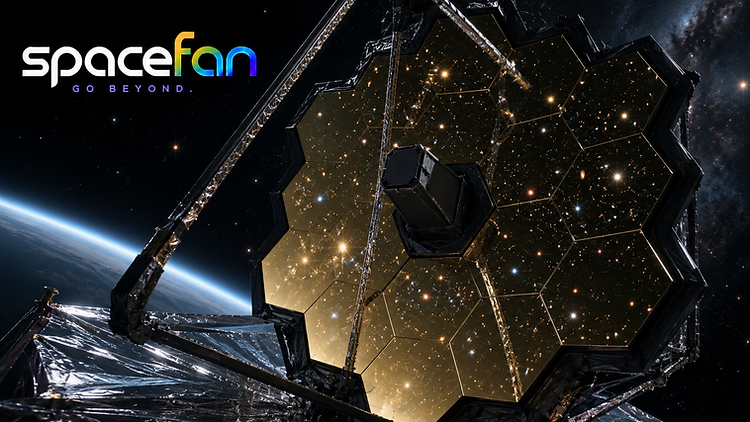
James Webb Space Telescope in space with its gold segmented mirror facing the stars.
Image · Space.Fan

The Drop

Astronomers are on a hunt for rocky s that resemble Earth. To find these worlds, they look at light filtering through a 's atmosphere. However, reading this light is tricky. Clouds, heavy gases, and surface conditions often blur the data, making it hard to tell what a is actually made of. Scientists call this problem a degeneracy, where one set of data could mean two very different things. Venus is the perfect laboratory for this problem. Because it is a rocky world with a thick atmosphere, it acts as a 'benchmark' or a standard guide. If we can accurately map out the atmosphere of Venus, we can use that data to better understand distant s that look similar to it. NASA’s upcoming mission, called DAVINCI, will fly into the clouds of Venus. It will measure gases and chemistry in ways we have not been able to do for decades. Once this new, high-quality data arrives, scientists will use it to refine their computer models. This will clear up the guesswork when analyzing light from far-off alien worlds. Researchers tested how much the DAVINCI data would help by running simulations. They found that the 'fuzziness' in our current models of Venus-like atmospheres will drop significantly. By knowing exactly what is happening in the Venusian air, scientists will be five to fifteen times more accurate when they study the heat coming from distant, rocky s.
Advertisement

Why It Matters

This research is a huge deal for the new era of space telescopes like the James Webb Space Telescope and the future Habitable Worlds Observatory. These powerful tools can see distant s, but they need accurate 'translation keys' to understand what they are seeing. By fixing our understanding of Venus, we make sure that when we eventually spot an Earth-like , we are not misreading its atmosphere as something else. This work turns Venus into a master key. It allows scientists to rule out wrong answers about distant s, helping us focus on worlds that might actually be similar to our own home.
Advertisement

The Catch

This study is based on computer models and predictions of what the DAVINCI mission will find. While these models are based on the best science available, we still have to wait for the mission to actually reach Venus to see if the data matches our expectations. There is always a chance that the atmosphere of Venus holds surprises that our current math did not predict.

Put That in Perspective

For a long time, our knowledge of Venus came from missions in the 1970s and 1980s. Technology has come a long way since then. DAVINCI will provide a modern, high-definition look at our neighbor, finally updating old data to help us peer into the deep space of the future.

Source September 19, 2026
AJ

Keep Exploring Space